If you have ever bought a lipstick or blouse that looked flattering on the hanger—or on someone else—only to make your complexion look tired in the mirror, the issue usually comes down to undertone harmony rather than the garment itself.
That is why colour analysis in Singapore has become a popular appointment for professionals, brides-to-be, and anyone tired of wardrobe guesswork. Instead of chasing seasonal fashion trends, a personal colour analysis identifies the exact spectrum of shades that naturally brighten your skin, soften under-eye shadows, and bring balance to your features.
Whether you are comparing studio options or preparing for your first appointment, this guide walks through how seasonal colour analysis works, what usually happens in a consultation, what our own workshop includes, and how to choose the right format for your goals.
How Seasonal Colour Analysis Works
Most colour consultations in Singapore use seasonal colour analysis—either the classic 4-season framework (Spring, Summer, Autumn, Winter) or an expanded 12-season system that breaks each season into three sub-types. Rather than judging by surface skin fairness alone, an analyst evaluates three core dimensions:
- Undertone (Temperature): Whether your skin has warm (golden, peachy, or olive) undertones, cool (pink, rosy, or bluish) undertones, or a neutral balance.
- Depth (Value): Whether your overall natural colouring—combining skin, hair, and eye colour—is light, medium, or deep.
- Clarity (Chroma): Whether your features look best in clear, vivid, high-contrast colours or soft, muted, blended tones.
Because two people with the same skin depth can have completely different undertones and contrast levels, accurate analysis relies on observing how your face reacts to colour in person rather than relying on online quizzes.
What Usually Happens During a Colour Analysis Session
While formats vary between standalone image consultancies and hands-on beauty workshops, a traditional colour analysis consultation usually follows four stages:
1. Consultation and Feature Assessment
The session typically begins with a short discussion about your daily routine, wardrobe habits, and styling goals. The consultant also observes your natural hair colour, eye clarity, and bare skin tone under neutral, daylight-balanced lighting.
2. Fabric Draping Under Neutral Lighting
Draping is the centrepiece of most standalone personal colour analysis appointments. Seated in front of a mirror with a neutral cape covering your clothes, you have calibrated fabric swatches placed one by one beneath your chin. As each shade is swapped, you watch for immediate visual shifts:
- Flattering shades make your complexion look clearer, healthier, and more even, while making your eyes appear brighter.
- Clashing shades can cast grey or yellow shadows across the lower face, accentuate redness or dark circles, or overpower your features.
3. Identifying Your Season and Key Neutrals
Once your undertone, depth, and clarity are confirmed, you receive your seasonal profile along with general wardrobe guidance on:
- Core neutrals: Everyday shades for staples (for instance, crisp pure white versus warm ivory, or charcoal grey versus camel).
- Accent colours: Standout shades suited for special occasions or key events.
- Shades to avoid near your face: Colours that drain warmth or clash with your natural contrast.
4. Practical Application
The final part of a consultation translates your palette into everyday choices—such as jewellery metals (gold, silver, or rose gold), hair colour direction, or cosmetic shades.
What Our Personal Makeup Workshop Includes
If your main goal is finding shades that flatter your features and learning how to apply them to your face—without booking a multi-hour wardrobe audit—our Personal Makeup Workshop pairs colour assessment directly with practical makeup coaching.
Each session includes:
- One personalised colour analysis tailored to your natural colouring
- One guided basic makeup session to help you apply flattering shades step by step
- One Polaroid photo to commemorate your session
- Duration & Location: 1.5–2 hours at Orchard Central
- Price: S$128
How to Choose the Right Colour Analysis Option in Singapore
When searching for colour analysis in Singapore, you will encounter several formats—from Korean-style studios to full-wardrobe image consultancies and hands-on beauty workshops. Comparing what each option includes helps you choose the right fit for what you actually want to walk away with.
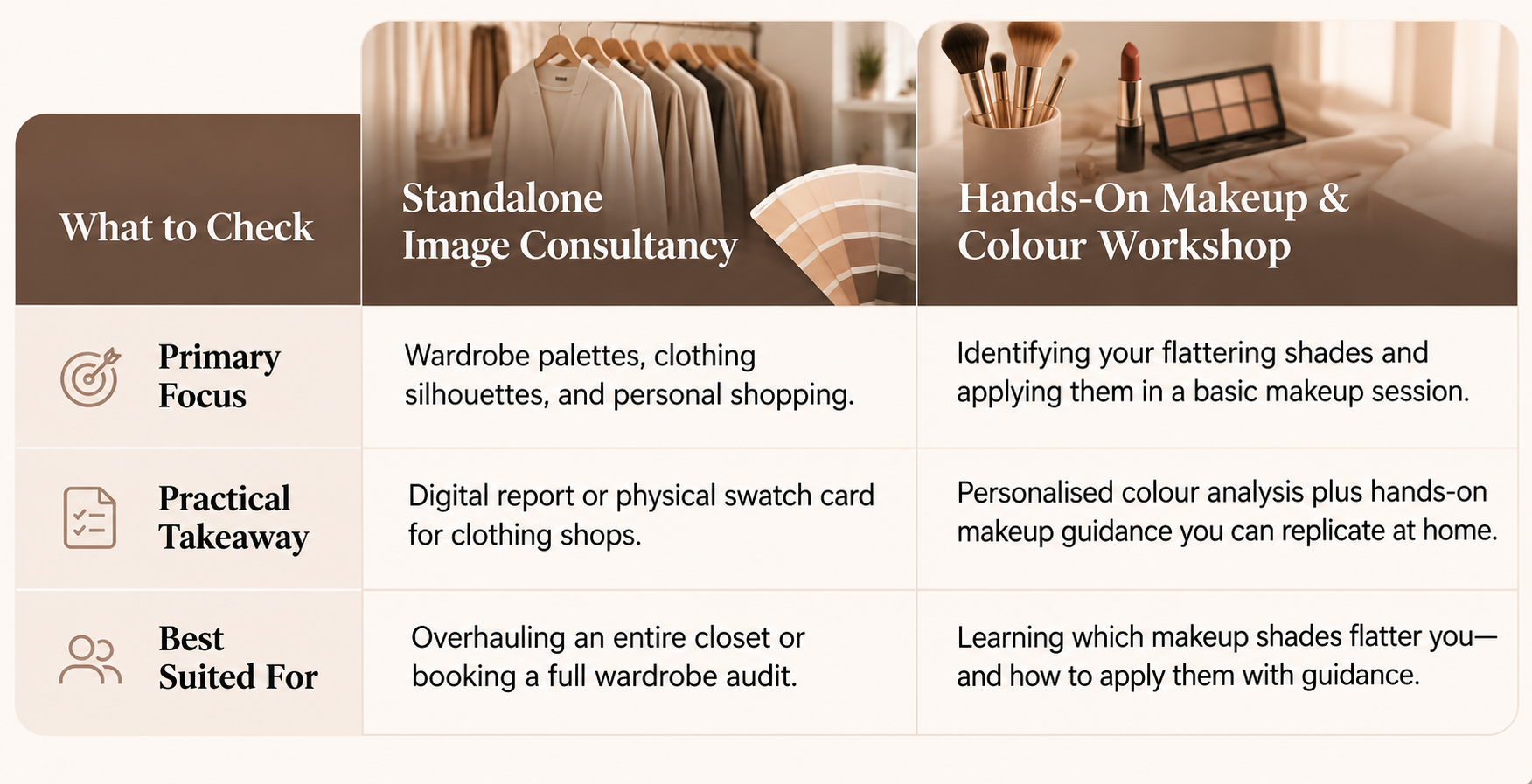
4 Questions to Ask Before Booking
- Do they assess under consistent, neutral lighting? Phone apps and screen filters distort undertones. Look for in-person sessions conducted under reliable studio lighting.
- Are they experienced with diverse Asian skin tones? Singapore's Chinese, Malay, Indian, and Eurasian complexions span a wide range of olive, golden, neutral, and cool undertones. Choose facilitators who assess undertone independently from surface skin depth.
- Do they explain why a colour works? Knowing why soft muted tones or high-contrast shades flatter you makes shopping far easier than memorising a rigid list of rules.
- Will you practise applying your results? Many people get their palette analysed only to realise they still aren't sure how to apply shades that suit their features.
Applying Colour Analysis: Everyday Makeup, Custom Cosmetics, or Styling Roles
Depending on whether you want to update your personal routine, create a custom product, or use colour theory at work, there are three practical ways to take the next step:
- Learn Everyday Makeup Application: Our Personal Makeup Workshop focuses on pairing a personalised colour analysis with a guided basic makeup session so you leave confident in your daily routine.
- Create Your Own Custom Shade: If you already know you want to formulate a physical product matched to your undertones, our Cosmetic Making Workshop begins with a personal colour assessment before you craft one custom lipstick, blush, or eyeshadow.
- Use Colour Analysis Professionally: Want to use colour analysis professionally, for example in fashion retail or styling? Our Proposals That Sell course teaches sales and business development professionals how to apply colour and fashion analysis to build client-ready styling recommendations.
How to Prepare for a Colour Analysis Session
To ensure an accurate reading on the day of your appointment, standard preparation for colour analysis includes three simple steps:
- Arrive with a clean, bare face: Foundation, BB cream, tinted sunscreen, blush, and lip tint mask your natural skin undertone. If you wear makeup while travelling to the studio, bring makeup remover or arrive a few minutes early to cleanse.
- Wear a plain, neutral top: White, grey, black, or soft beige prevents bright clothing from reflecting coloured light onto your jawline.
- Keep hair off your face (and mention hair dye): If your hair is colour-treated, let your facilitator know your natural root shade so they can account for your original contrast.
Frequently Asked Questions
Do I need to remove my makeup before a colour analysis session?
Yes. Even sheer tinted moisturiser or lip balm can alter how your undertone looks during the assessment. Starting with a bare face gives you the most accurate result before moving on to makeup application.
Does seasonal colour analysis work if I tan easily or have deeper skin?
Yes. Your surface tan may deepen in Singapore's sun, but your underlying genetic undertone (warm, cool, or neutral) remains consistent. A trained analyst evaluates undertone harmony rather than surface lightness or darkness.
Can I wear contact lenses during the session?
Clear prescription contact lenses are completely fine. Avoid coloured contact lenses, as changing your natural iris colour can skew the assessment of your natural contrast and eye brightness.
Are personal colour analysis and makeup workshops eligible for SkillsFuture Credit?
No. Leisure beauty and styling workshops (such as our Personal Makeup Workshop and Cosmetic Making Workshop) are not SkillsFuture-funded. However, professional courses like Proposals That Sell—which teaches sales and styling professionals how to build client-ready fashion proposals—are SkillsFuture-funded; check our subsidies page for full eligibility details.
Ready to Discover the Shades That Suit You Best?
Stop guessing at makeup counters and clothes racks. Book your session at our Personal Makeup Workshop at Orchard Central, or browse all creative sessions on our workshops page to find the right fit.