Why Local Horror Stories Make Better Experiences: What HHN 2026 Gets Right
Every autumn, theme parks around the world pull out the same reliable playbook for Halloween: Hollywood movie slasher icons, Western zombie apocalypses, and European gothic vampires. While a chainsaw-wielding killer or a classic ghost story gets the heart racing, there is a distinct difference between being startled by a screen monster and being viscerally terrified by a legend you grew up hearing.
At Universal Studios Singapore’s Halloween Horror Nights 2026 (HHN 2026), the standout haunted houses aren't the big-budget international pop-culture imports. The true stars are the meticulously crafted, ultra-localized horror experiences rooted in Southeast Asian folklore, local urban legends, and cultural superstitions.
Why do local horror stories hit so much harder than Hollywood blockbusters? Here is why hyper-local folklore builds superior immersive experiences—and what HHN 2026 gets right about the psychology of fear.
1. The Power of "Cultural Conditioning" and Uncanny Familiarity
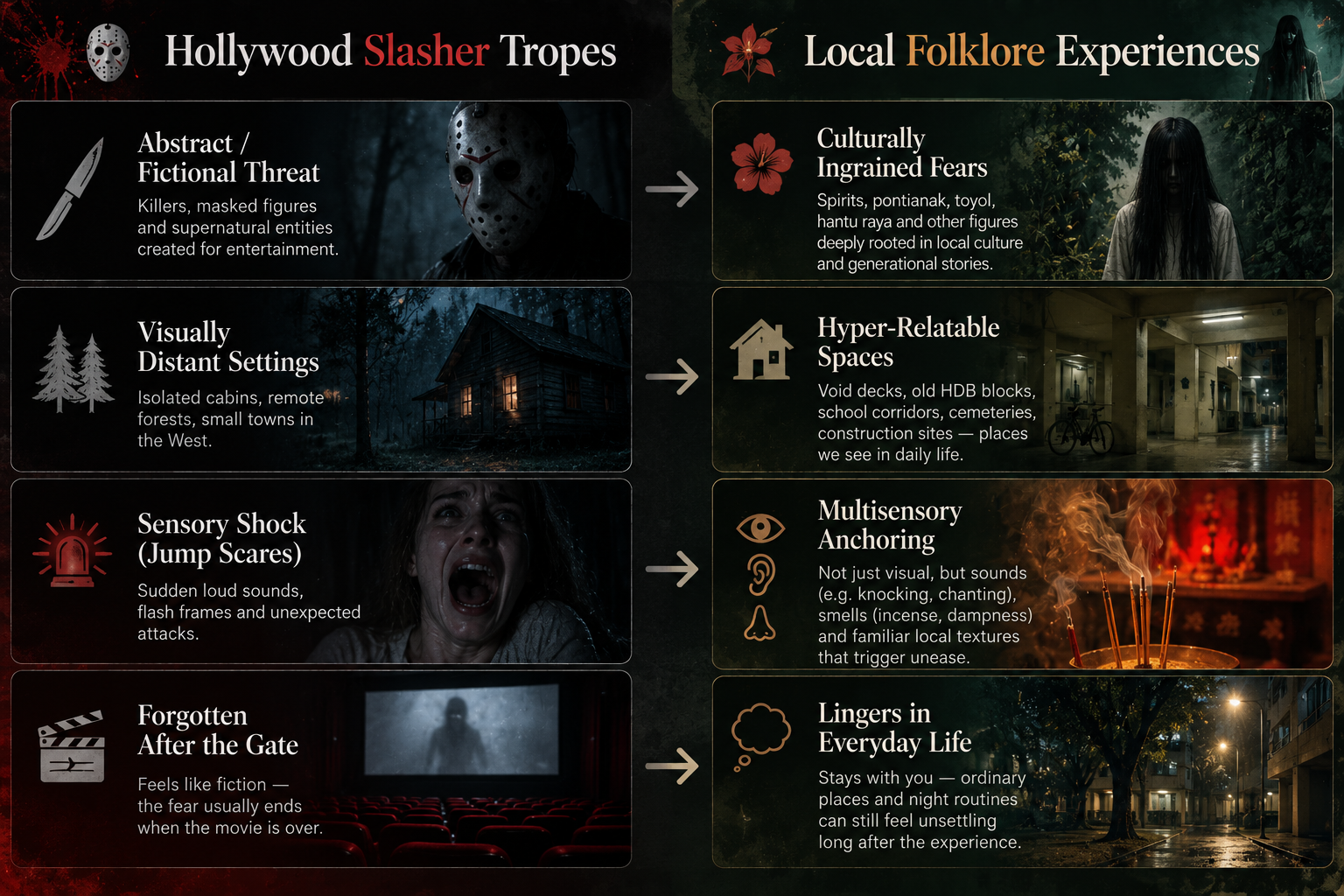
Hollywood horror relies on jump scares and visual gore—stimuli that startle the nervous system regardless of who you are. But local horror taps into something far deeper: cultural conditioning.
When a haunted house recreates a generic 1980s American suburban house, it feels like stepping onto a movie set. It is novel, but distant. However, when HHN recreates:
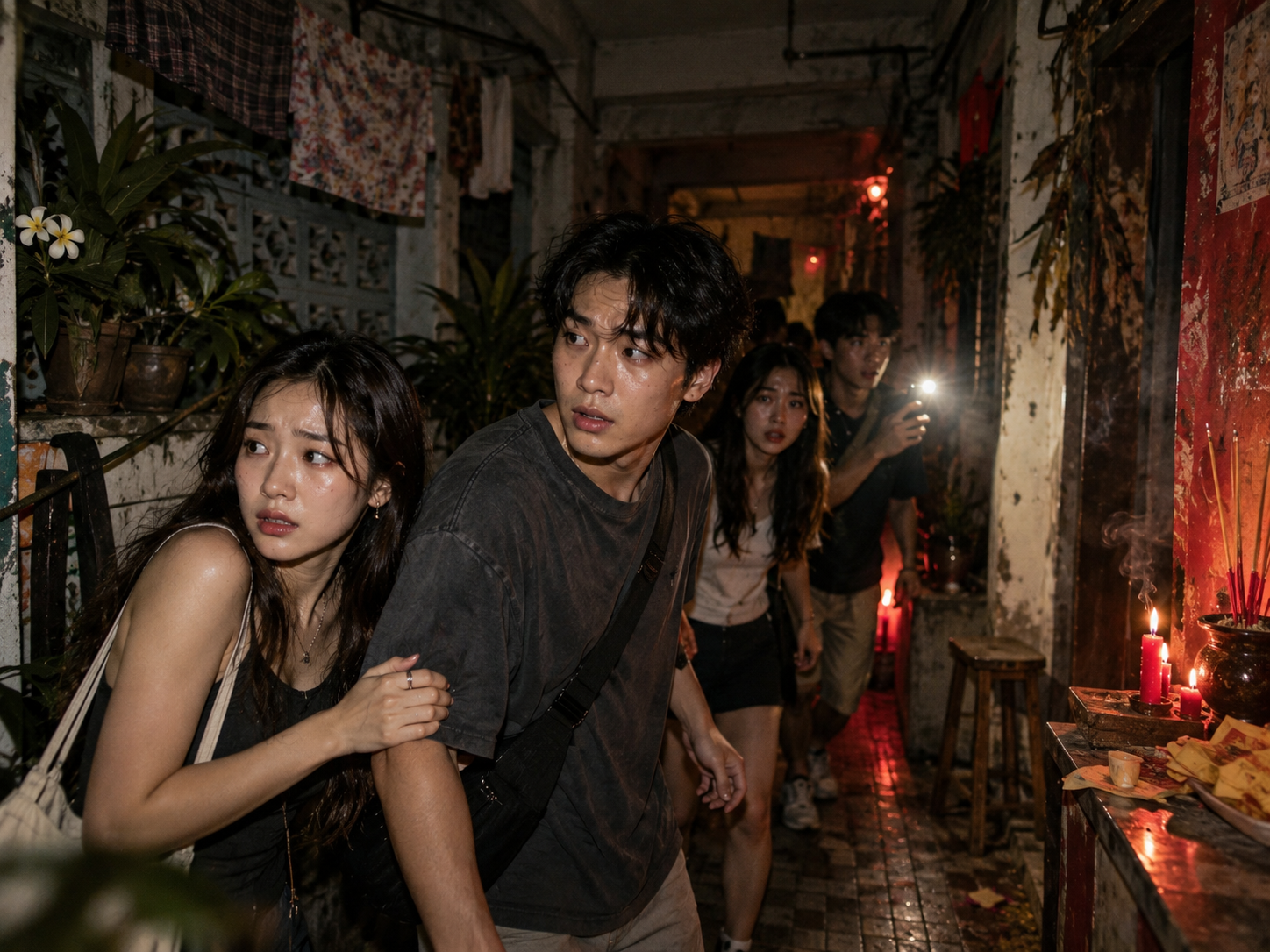
- A dimly lit, flickering HDB void deck complete with red candles and incense burners.
- An abandoned kampong dwelling smelling of damp earth and frangipani flowers.
- A traditional Asian funeral setting complete with ritual paraphernalia and joss paper.
The fear instantly shifts from fictional to uncomfortable. It breaks down the boundary between the theme park attraction and your real everyday life. You aren't watching a movie; you are stepping into a environment that mirrors spaces you navigate in the real world.
2. Multi-Sensory Anchoring: Smells and Sounds That Trigger Memory
Local folklore isn't built on visuals alone; it is deeply tied to olfactory and auditory triggers passed down through generations. HHN 2026 excels by leveraging sensory congruence to make local haunted houses feel terrifyingly real:
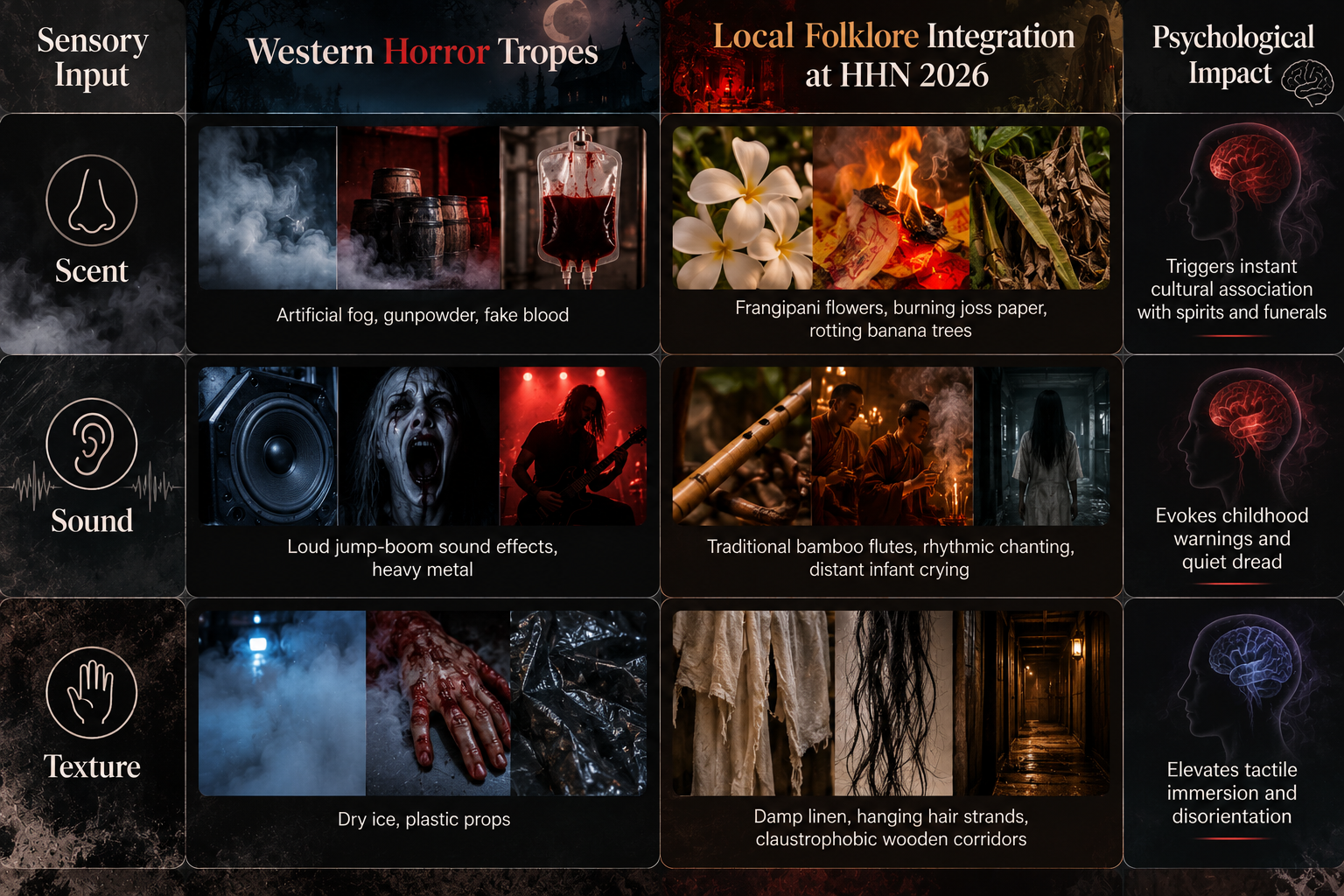
Smelling the sweet scent of jasmine or frangipani in total darkness isn't just a theme park gimmick—to anyone familiar with Southeast Asian ghost stories, it is the universal signifier that a Pontianak is nearby. The fear is pre-programmed long before the actor jumps out.
3. Taboo & The Psychological Dread of Rules
Western horror often centers on physical survival: Can you outrun the killer?
Local Asian horror, by contrast, centers on spiritual taboos, karmic consequences, and broken rules. In regional folklore, horror stems from doing things you were explicitly warned as a child never to do:
- Stepping on offerings left on the roadside.
- Looking behind you when someone calls your name at night.
- Whistling after dark.
When HHN 2026 structures its haunted houses around these unspoken rules, it engages the visitor's subconscious guilt. Walking through an environment where you are actively breaking cultural taboos creates a sense of lingering, psychological dread that outlasts simple jump scares.
4. The "Lingering Effect": Fear That Follows You Home
The ultimate test of a haunted attraction is what happens after you walk through the exit turnstiles.
When you leave a haunted house based on an American movie monster, the fear stays inside the park. You get in your car or take the train home knowing that the monster belongs on a cinema screen.
When you leave a haunted house based on local urban legends, the horror follows you home.
That dark void deck near your block, the quiet smell of incense in your neighborhood during nightfall, or the faint rustling in a banana tree suddenly takes on new, terrifying context. By grounding their experiences in local reality, HHN 2026 ensures that the attraction continues in the visitor's mind long after the night ends.
What Event Designers Can Learn From HHN 2026
- Prioritize Authenticity Over Universal Appeal: Hyper-specific local narratives resonate far more deeply with audiences than watered-down, broadly appealing concepts.
- Engage All Five Senses: Visuals get people through the door, but scent, acoustic ambiance, and spatial textures create lasting emotional impact.
- Build Around Relatable Spaces: Grounding fantastical or supernatural elements in mundane, recognizable everyday environments amplifies psychological tension.
Why Local Stories Create Stronger Experiences
HHN 2026 shows that the most memorable experiences are not always the biggest or loudest—they are the ones that feel personally familiar.
By combining local stories, recognisable environments, cultural symbols, scent, sound, and texture, an attraction becomes more than something people simply see. It becomes something they feel, remember, and continue thinking about afterwards.
The lesson for brands and event designers is simple: don’t just create spectacle. Create experiences rooted in the audience’s own world.