
Why Do Recruiters Google You Before They Read Your CV?
When you submit a job application, it is easy to assume the hiring manager starts by reading your resume word for word.
In reality, modern hiring often works in reverse. With hundreds of applications arriving for every open role, recruiters frequently look for quick ways to verify candidates before diving into a long resume. For many hiring managers, a quick search of your name on Google or LinkedIn isn't a secondary check—it’s step one.
Understanding why recruiters search for you online before reading your CV reveals a lot about how hiring decisions are made today, and why managing your digital footprint is an essential career skill.
1. Quick Verification Beats Resume Claims
Resumes are inherently self-reported. Anyone can write that they managed a high-budget project, led a large team, or drove significant growth. A search engine query offers recruiters an immediate, independent way to verify those claims.
When a recruiter types your name into a search bar, they are looking for external proof of your experience:
- Professional Presence: Do your LinkedIn profile, past company bios, or industry listings match the timeline on your CV?
- Public Work & Output: Are there published articles, conference presentations, portfolio projects, or code repositories that validate your technical skills?
- Consistency: Does your public history align with the narrative in your application?
What Professionals Can Learn
Key Takeaway: Ensure your public digital presence matches your resume word-for-word on dates, job titles, and major responsibilities. Discrepancies between your LinkedIn profile and your CV are an immediate red flag for hiring teams.
2. A Digital Footprint Shows Real-World Influence
A standard CV is restricted to a page or two of bullet points. A search engine results page, however, reveals the broader context of your career.
Recruiters use search engines to see if you are actively engaged in your field. They aren't looking for celebrity-level fame; they are looking for signs of genuine professional involvement:
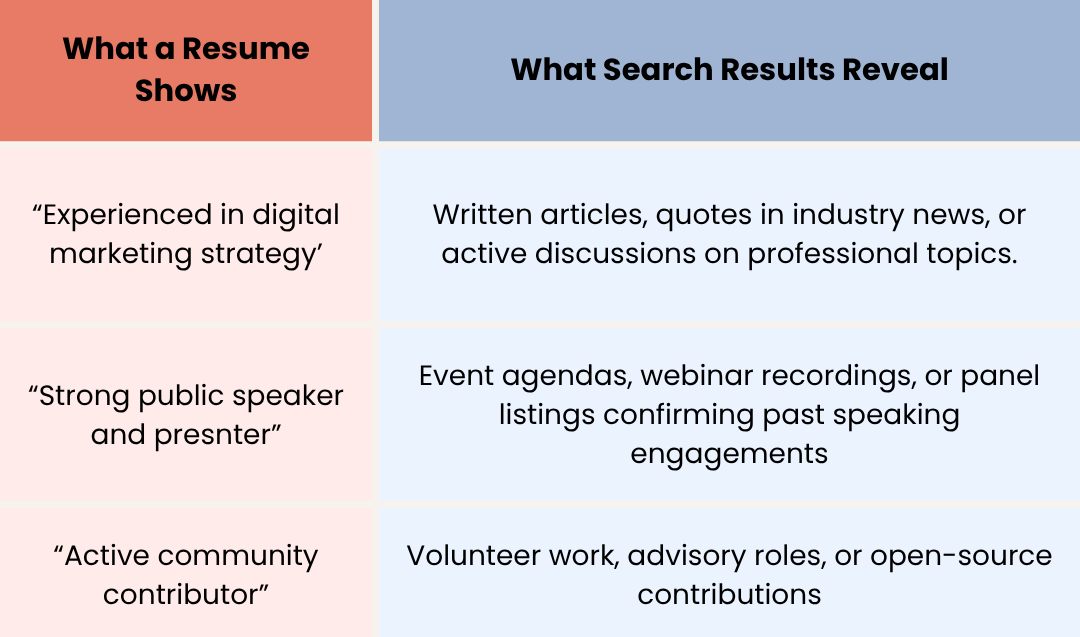
What Professionals Can Learn
Key Takeaway: You don't need a massive social media following, but having a few high-quality, publicly searchable examples of your work—like a portfolio, published article, or professional project—instantly sets you apart from candidates who exist only on paper.
3. Risk Assessment & Reputation Checks
Beyond verifying skills, recruiters search for candidates to manage risk. Before an organization invests time in an interview process, they want to ensure there are no obvious professional red flags associated with a candidate's name.
Search engine results give recruiters a quick glance at your public demeanor and professional judgment:
- Tone and Conduct: How do you interact in public forums or professional comment sections?
- Brand Alignment: Does your public footprint align with the values and culture of the hiring organization?
- Privacy Management: Have you separated your personal social media accounts from your public professional profiles?
What Professionals Can Learn
Key Takeaway: Audit your online presence regularly. Set personal social accounts to private and ensure that any public-facing profiles present a calm, constructive, and professional tone.
4. First Impressions Shift the Way Your CV Is Read
Perception plays a huge role in the hiring process. When a recruiter finds a clean, professional LinkedIn profile or an impressive personal website right away, it creates a positive first impression.
This psychological framing changes how they read your CV moments later:
- Without a positive online presence: The recruiter reads your CV with a neutral or critical eye, looking for reasons to rule you out of a large applicant pool.
- With a strong online presence: The recruiter reads your CV with positive confirmation bias, actively looking for details that support the strong impression they just formed.
What Professionals Can Learn
Key Takeaway: Treat your Google search results as your real homepage. The goal is to ensure the top 3–5 search results for your name reinforce your expertise before the recruiter opens your PDF application.
Your Online Presence Is Part of Your Professional Identity
In today's hiring landscape, your CV is no longer the first impression—it is often the second.
Before recruiters invest time reading your qualifications, many will spend just a few seconds searching your name online. A well-maintained LinkedIn profile, thoughtful professional content, or a strong digital portfolio can give hiring managers greater confidence in your skills before the interview even begins.
The good news is that building a positive digital presence doesn't require becoming an influencer or posting every day. It starts with presenting your expertise consistently, sharing valuable insights, and ensuring your online profiles accurately reflect who you are as a professional.
Build a Future-Ready Professional Brand
Looking to strengthen both your digital presence and your AI skills?
Our AI & Digital Skills Course equips professionals with practical knowledge on using AI tools for content creation, workplace productivity, marketing, and communication. You'll learn how to work smarter, showcase your expertise more effectively, and build a professional reputation that stands out.