The Hype Engine: Why Limited-Edition Products Dominate Major Events
Whether it is a $120 official festival hoodie at Coachella, a Super Bowl championship collection, or an exclusive footwear drop during Paris Fashion Week, major cultural events consistently turn standard merchandise booths into war zones of intense consumer demand.
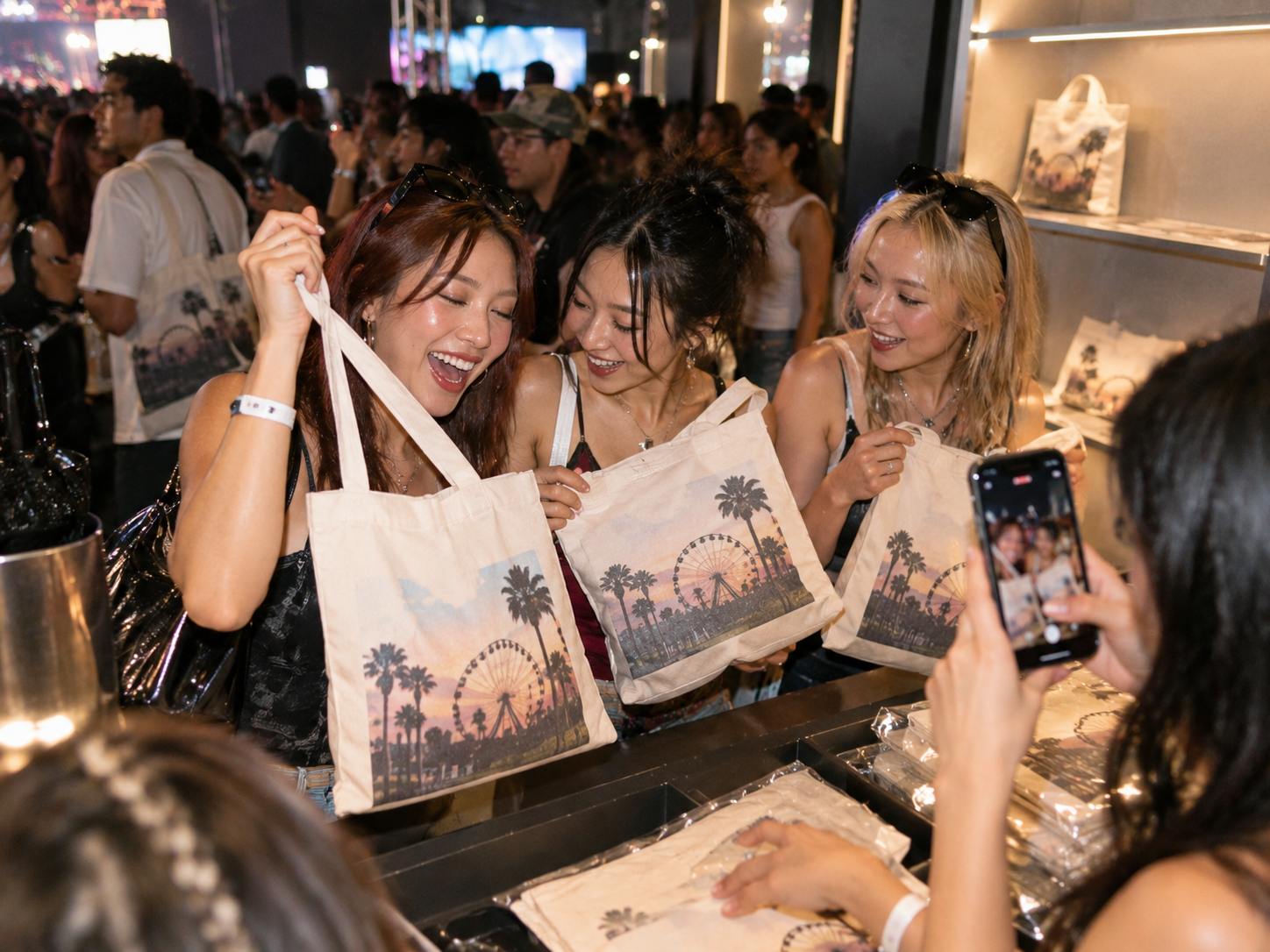
Outside the event gates, a consumer might hesitate over a $30 graphic t-shirt on a website, abandoning their cart to search for discount codes. But put that same consumer inside an arena or festival ground, and suddenly they will stand in a two-hour line to shell out three times the price for a limited-run piece.
Why does this happen? The answer lies at the intersection of behavioral economics, social identity theory, and group psychology.
Here is a deep dive into why event-exclusive drops work so well, how top brands execute them, and how you can apply these principles to your own offerings.
1. The Scarcity Engine: Enforced Urgency vs. Manufactured Urgency
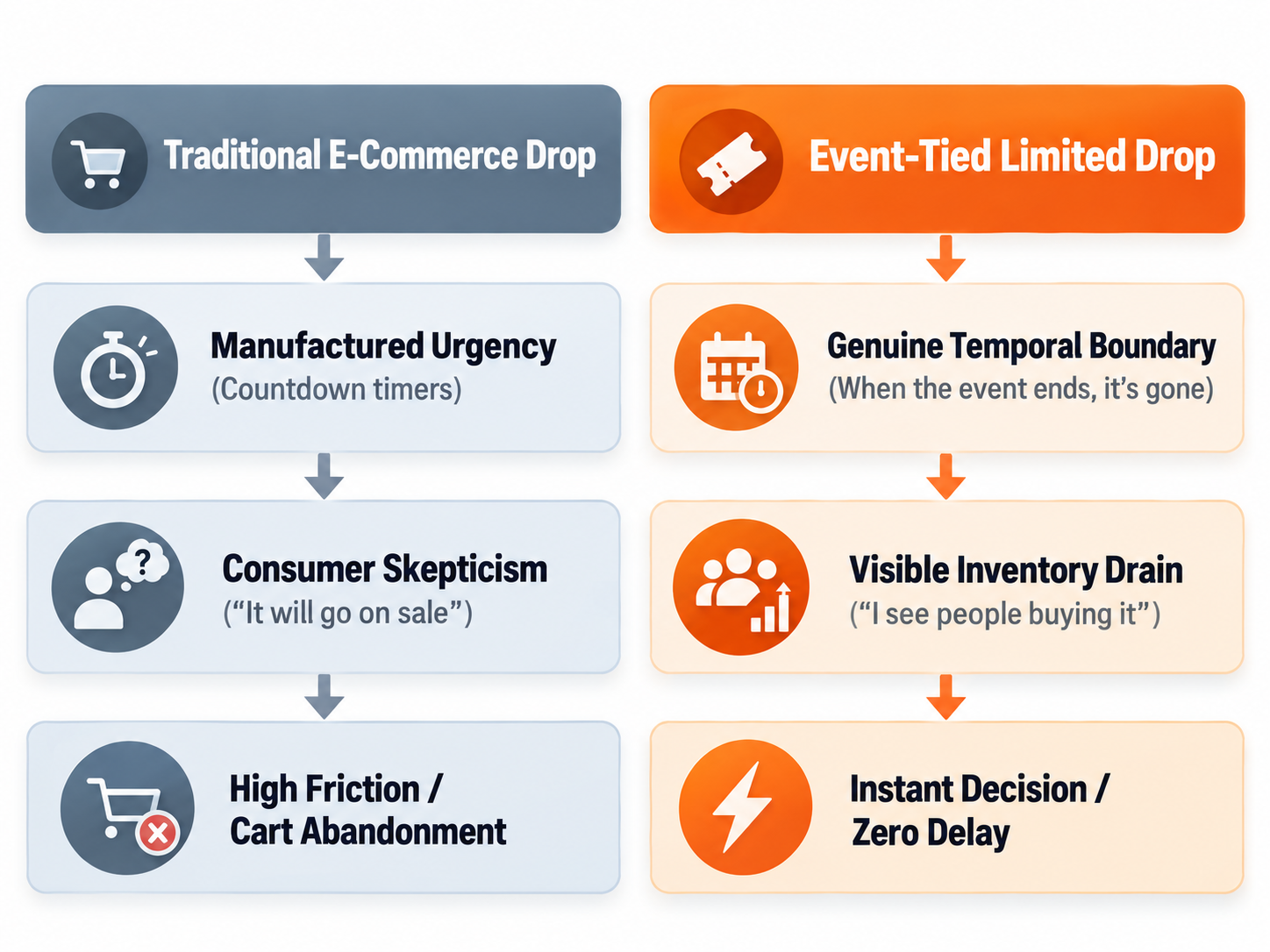
In standard e-commerce, urgency is frequently manufactured. Banners declaring "Sale Ends Tonight!" are often followed by an identical "Flash Sale" on Monday morning. Consumers have grown immune to these artificial countdown timers.
At major events, however, scarcity is genuine, visible, and strictly enforced by time and space.
- Temporal Boundaries: The product lifecycle is tied directly to a fleeting window. When the festival gates close, the race ends, or the final whistle blows, the opportunity to purchase evaporates.
- Visible Inventory Drain: Standing in a physical line, buyers watch others walk away with armfuls of merch. Seeing boxes empty in real time triggers Psychological Reactance—a cognitive reaction where the perceived threat of losing access to an item causes desire for it to spike sharply.
2. Souvenirs 2.0: Products as Physical Anchors for Memory
A standard product serves a functional purpose (keeping you warm, telling time, carrying items). An event-exclusive product serves an emotional purpose—it acts as a physical anchor for an intangible experience.
The Science of "Memory Anchoring"
Psychological research into consumer behavior shows that people value items more when they are tied to high-emotion, high-dopamine moments.
- Hedonic Transfer: The intense joy, excitement, and awe experienced during a live concert or championship victory gets mentally transferred onto the physical object purchased in that setting.
- Appreciation Over Time: Standard products decay in value as they age. A limited-edition event item, however, often grows more valuable to the owner over time because it becomes a repository for nostalgia.
3. Social Capital and the "I Was There" Signal
In an era where identity is constantly broadcasted through digital channels, limited-edition merch acts as the ultimate signal of social capital and access.
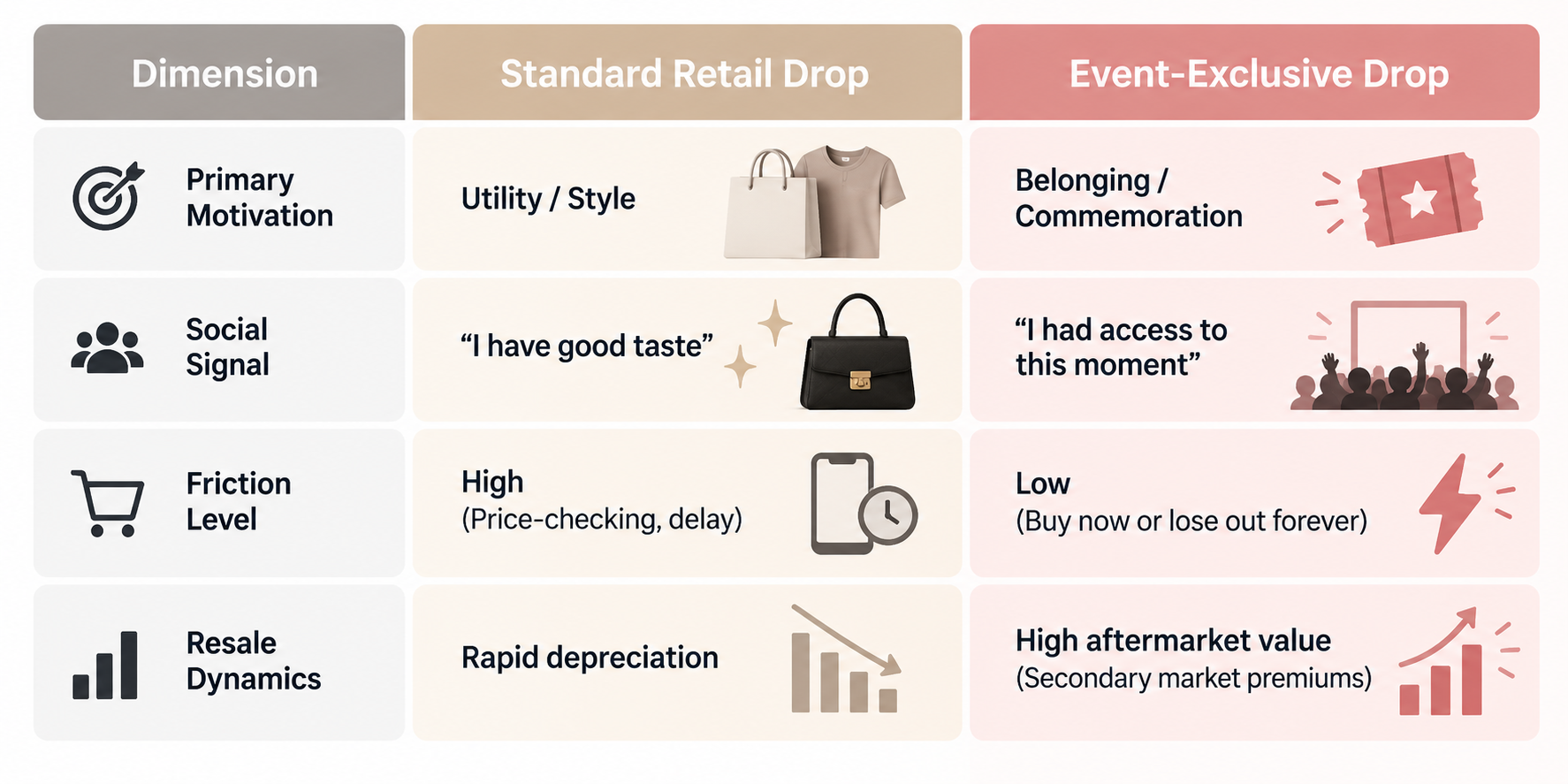
Owning an event drop signals effort, presence, and access. You couldn't just order it off Amazon at midnight; you had to buy a ticket, navigate the venue, wait in line, and secure the item before stock ran out. It acts as a physical badge of honor within a community of like-minded fans.
4. Amplified "Collective Effervescence"
Sociologist Émile Durkheim coined the term collective effervescence to describe the shared excitement and unified energy that occurs when a large group gathers for a common purpose.
During a major event—whether it's the Formula 1 Grand Prix or Taylor Swift's Eras Tour—individual financial rationality gets quieted by group dynamics:
- Social Proof at Scale: When thousands of people around you are wearing the event apparel, not owning it makes you feel like an outsider.
- Emotional Highs Lower Friction: High-arousal emotional states reduce price sensitivity. When adrenaline and happiness are high, spending $100 on a souvenir feels trivial compared to the overall magnitude of the experience.
Case Studies: Masterclass Execution in the Wild
Case Study A: The Eras Tour "Blue Crewneck" Craze
During Taylor Swift’s record-breaking tour, a specific blue tie-dye crewneck sweater was made available exclusively at in-person concert merchandise trucks. Fans stood in line for up to 8 hours before concerts even started just to secure one. The sweater quickly commanded prices exceeding $400 on secondary markets like eBay.
- Why it worked: It wasn't sold online, forcing physical attendance as a prerequisite. It became an instant visual signifier among fans that separated casual listeners from die-hard attendees.
Case Study B: Formula 1 x Kith
Lifestyle brand Kith partnered with Formula 1 to drop highly exclusive apparel collections tied directly to race weekends like the Las Vegas Grand Prix. The gear was only available via temporary pop-up activation hubs at the track.
- Why it worked: It combined the high-status luxury world of streetwear with the high-adrenaline spectacle of motorsport, capturing both fashion enthusiasts and racing fans in one high-urgency physical location.
Practical Strategy: How Brands Can Leverage Event Drops
You don't need to sponsor the Super Bowl to apply these principles. Any brand can harness the mechanics of event-exclusive product drops:
- Tie Products to Genuine Milestones: Never cap supply without a clear narrative reason. Anchor your drops to company anniversaries, product launches, community meetups, or industry conferences.
- Design for Instant Recognition: Ensure event items feature distinct design elements, colorways, or dates that differentiate them clearly from your core line.
- Respect Supply Discipline: The single biggest mistake brands make is reprinting a "limited" drop because demand was high. Over-reprinting destroys consumer trust and kills the hype engine for future events.
- Create a Physical / Digital Hybrid Experience: If hosting an event, offer digital attendees a time-locked portal (e.g., active for only 60 minutes during a livestream) to simulate physical event urgency.
Turning Hype Into Brand Value
Limited-edition products succeed because they offer more than scarcity. They give customers a story, a sense of belonging, and a physical reminder of a memorable moment. The strongest brands understand that hype works best when it is connected to genuine experiences—not artificial urgency.
This is also where branding strategy matters.