Lipstick vs Lip Tint vs Lip Balm: What's the Difference?
Standing in the beauty aisle—or scrolling through online makeup shops—it is easy to feel overwhelmed by the sheer variety of lip products available. What used to be a simple choice between a bullet lipstick and a tub of Vaseline has expanded into an array of tints, oils, balms, stains, and glazes.
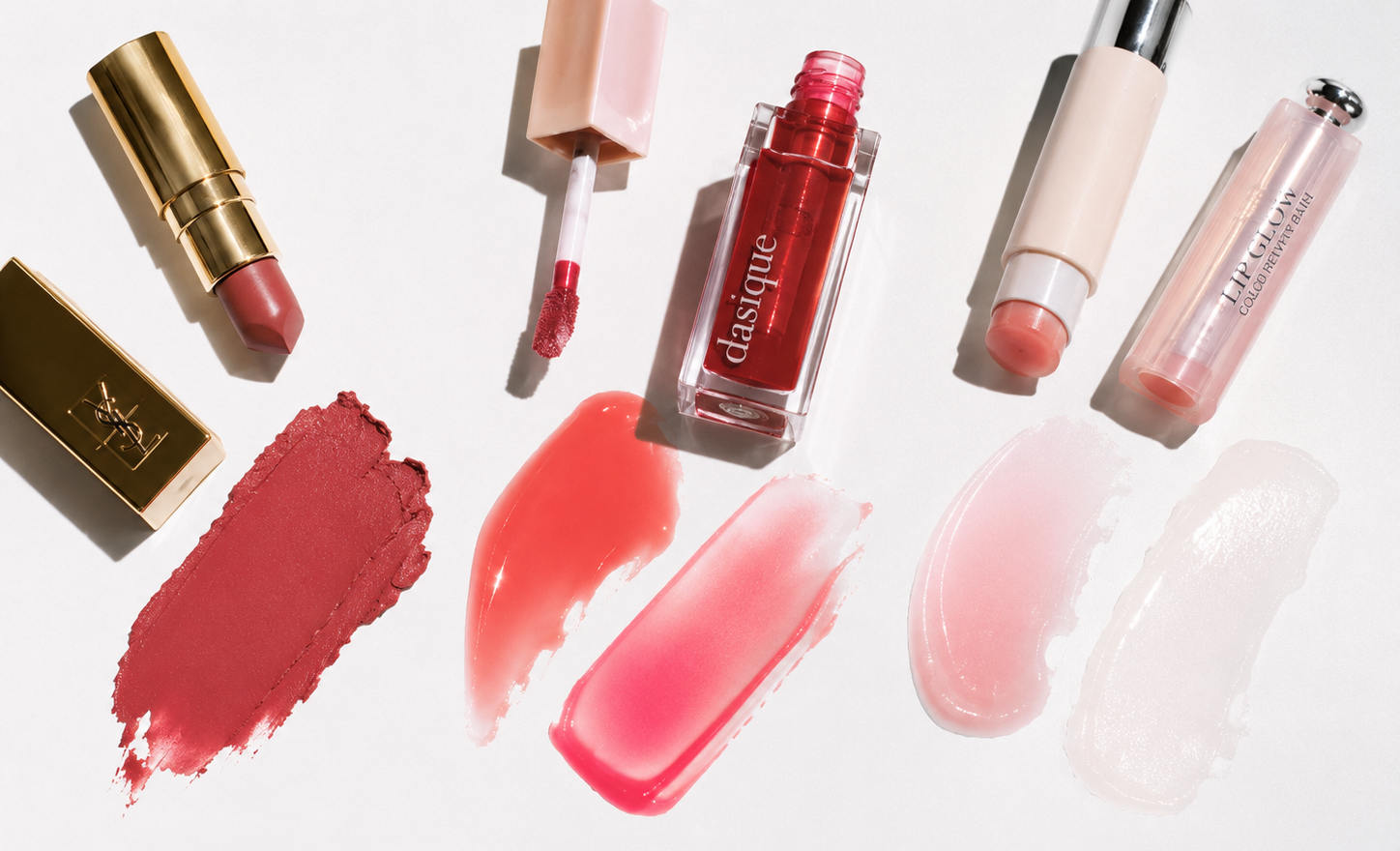
While lipstick, lip tint, and lip balm might all add something special to your makeup routine, they serve distinctly different purposes in terms of pigmentation, longevity, formula, and lip care benefits.
Understanding the fundamental differences will help you choose the right product for your routine, skin type, and daily lifestyle.
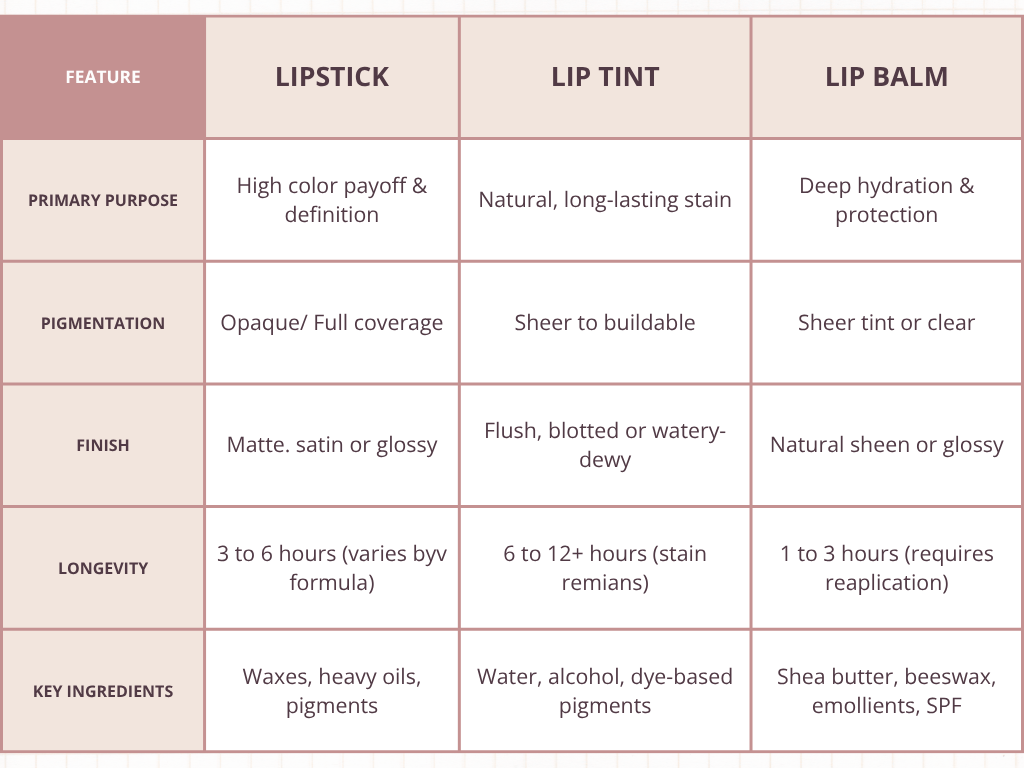
Quick Comparison: At a Glance
If you are looking for a fast breakdown before diving into the details, here is how the three stack up across key factors:
1. Lipstick: The Classic Choice for High Pigment and Structure
Lipstick is the original mainstay of lip makeup. Formulated primarily with a blend of waxes, oils, and concentrated pigments, lipstick is designed to sit on top of the lips to deliver rich, opaque color and precise definition.
Characteristics & Benefits
- Maximum Color Payoff: A single swipe provides immediate, full coverage that can completely change or enhance your natural lip shade.
- Versatile Finishes: Comes in a wide variety of finishes including flat matte, velvet, satin, metallic, and ultra-glossy.
- Precise Definition: The structured bullet shape (or liquid applicator) makes it easy to define the lip line and Cupid's bow.
Drawbacks to Keep in Mind
- Maintenance: Can smudge, transfer onto cups, or feather into fine lines without a lip liner.
- Texture: Traditional matte formulas can feel drying over long periods if lips aren't prepped beforehand.
What Beauty Consumers Should Know
Key Takeaway: Choose lipstick when you want high-impact color, precise lines, or a finished look for formal events, photos, or professional settings.
2. Lip Tint: The Low-Maintenance, Long-Wearing Stain
Popularized by Korean beauty routines (K-Beauty), lip tints—also known as lip stains—differ fundamentally from lipstick in how they interact with skin. Instead of sitting on top of the lips as a layer of wax and pigment, lip tints feature lightweight water or gel bases that absorb into the top layers of the skin.
Characteristics & Benefits
- Incredible Longevity: Because the dye binds to the skin, the color withstands drinking, eating, and mask-wearing without transferring.
- Natural, "Bitten" Look: Perfect for creating a soft gradient lip or a subtle, natural flush that looks like your lips, only better.
- Lightweight Feel: Feels practically weightless, like wearing nothing on your lips at all.
Drawbacks to Keep in Mind
- Difficult to Remove: Requires an oil-based makeup remover to fully erase at the end of the day.
- Highlights Dry Patches: Water-based tints cling to flaky skin, so smooth, exfoliated lips are a prerequisite for an even application.
What Beauty Consumers Should Know
Key Takeaway: Choose a lip tint for long days, busy schedules, or casual non-makeup looks where you want zero-touchup color that won't smudge off.
3.Lip Balm: The Essential Skincare Savior
Unlike lipsticks and lip tints, which are primarily decorative cosmetic items, lip balm is rooted in skincare. Its primary goal is to hydrate, nourish, and protect the delicate skin on your lips from environmental stressors like cold weather, wind, and dry air.
Characteristics & Benefits
- Intense Hydration: Packed with moisturizing emollients like shea butter, jojoba oil, lanolin, and beeswax that lock in moisture and repair chapped skin.
- Protective Barrier: Many formulas include SPF to guard against UV damage or soothing ingredients like ceramides and vitamin E.
- Effless Application: Easy to apply on the go without needing a mirror. Tinted versions offer a subtle pop of color alongside nourishment.
Drawbacks to Keep in Mind
- Minimal Pigment: Even tinted balms offer very light, sheer color that fades quickly.
- Frequent Reapplication: Requires regular touch-ups throughout the day as the oils absorb into the skin.
What Beauty Consumers Should Know
Key Takeaway: Keep a lip balm in your bag at all times for daily lip health. Use it as a night treatment, a daily barrier, or as a prep step 10 minutes before applying dry lipsticks.
The Best Lip Product Depends on Your Needs
There isn't a single "best" lip product—only the one that's best for the occasion and your personal preferences.
If you're after bold, statement-making colour for a special event, lipstick offers the coverage and precision you need. For busy days when you want long-lasting colour with minimal touch-ups, a lip tint is a practical choice. And when it comes to keeping your lips healthy and hydrated, a nourishing lip balm should be a staple in everyone's routine.
The more you understand the purpose and formulation of each product, the easier it becomes to build a makeup collection that works for your lifestyle rather than following every new beauty trend.
After all, great makeup isn't just about applying products—it's about understanding how they're made, why they work, and choosing the right formula for your needs.
Curious About How Cosmetics Are Created?
Have you ever wondered what goes into making your favourite lipstick or why different formulas feel and perform so differently? Understanding cosmetic ingredients and formulation gives you a whole new appreciation for the products you use every day.