
From Scent to Sound: Why Multi-Sensory Branding Is Becoming Harder to Ignore
Walk into a Singapore Airlines cabin, and you are greeted by Batik 737, a signature fragrance custom-blended with rose, lavender, and citrus worn by flight attendants and infused into hot towels.
Board a luxury hotel elevator, and you hear a distinct low-tempo acoustic lounge track designed to regulate your heart rate.
Open a brand-new iPhone box, and you experience the deliberate, friction-controlled slide of the lid releasing a vacuum seal, followed by the crisp peel of protective film.
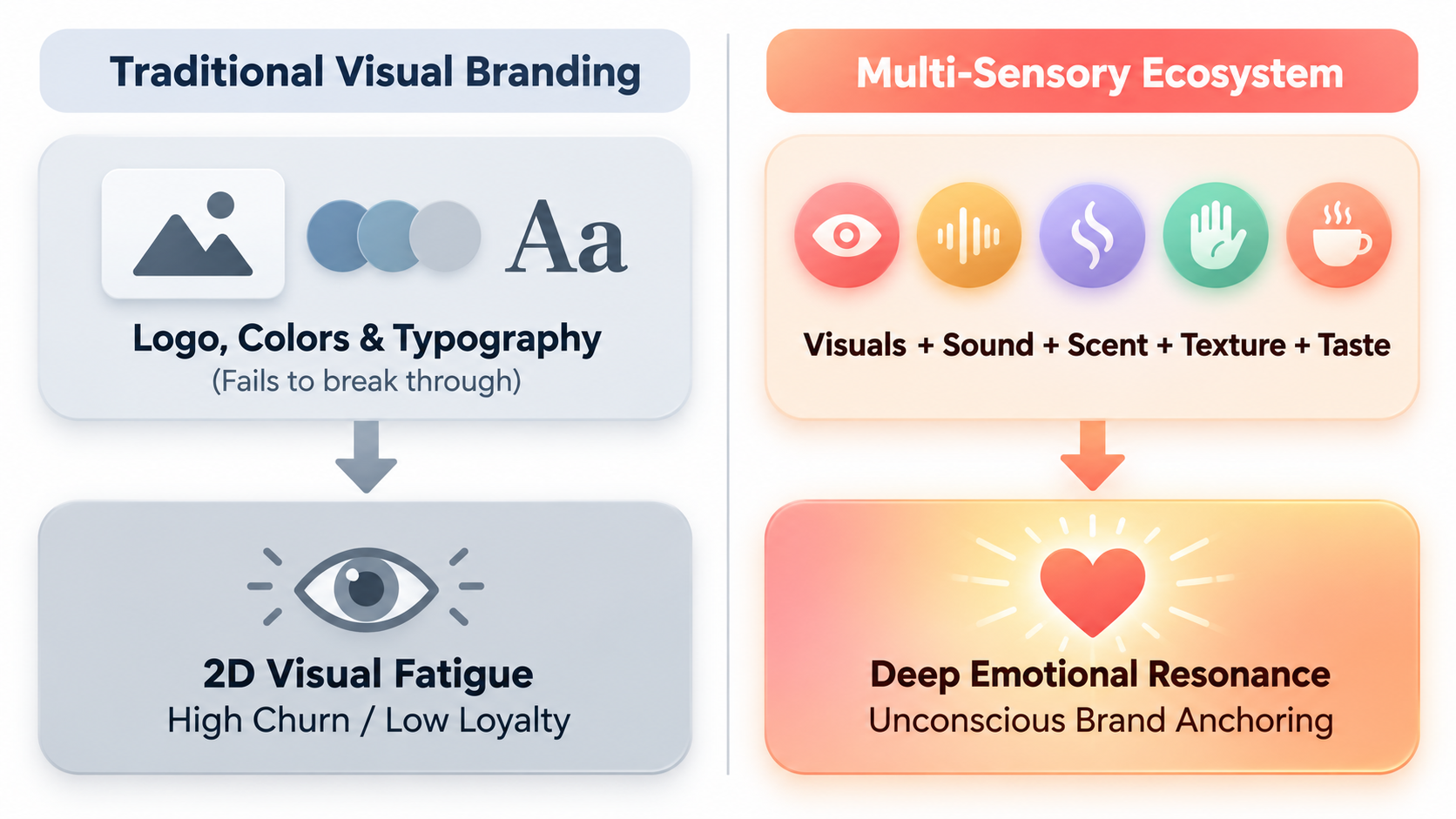
For decades, branding was almost entirely visual. Companies spent millions perfecting logos, typography, and color palettes. But in a digital landscape saturated with screen-based ads, visual marketing alone is no longer enough to command attention.
Modern brands are realizing that human memory, emotion, and loyalty aren't unlocked through the eyes alone—they are triggered across all five senses. Welcome to the era of multi-sensory branding.
1. The Neuroscience: Why the Brain Craves Sensory Depth
The human brain processes different sensory inputs through distinct neurological pathways. While visual information travels to the visual cortex for logical processing, scent and sound take a direct express route to the emotional engine of the brain.
- Olfactory Power (Smell): Scent is the only sense directly wired to the amygdala (the brain’s emotional center) and the hippocampus (the memory hub). Research shows that humans can remember scents with 65% accuracy after a full year, compared to just 50% of visual images after three months.
- Auditory Anchoring (Sound): Audio cues—such as Netflix’s iconic "Ta-Dum" or Intel’s five-note chime—trigger instant psychological recognition in under 0.5 seconds, well before the conscious mind finishes processing text or imagery.
- Tactile Weight (Touch): Haptic feedback, material texture, and weight directly influence perceived quality. Heavier wine bottles, matte-finish packaging, and weighted credit cards subconsciously signal luxury and durability.
2. The Sensory Toolkit: How Top Brands Design Beyond Sight
To build an unforgettable brand identity, companies map out sensory touchpoints across every stage of the customer journey:
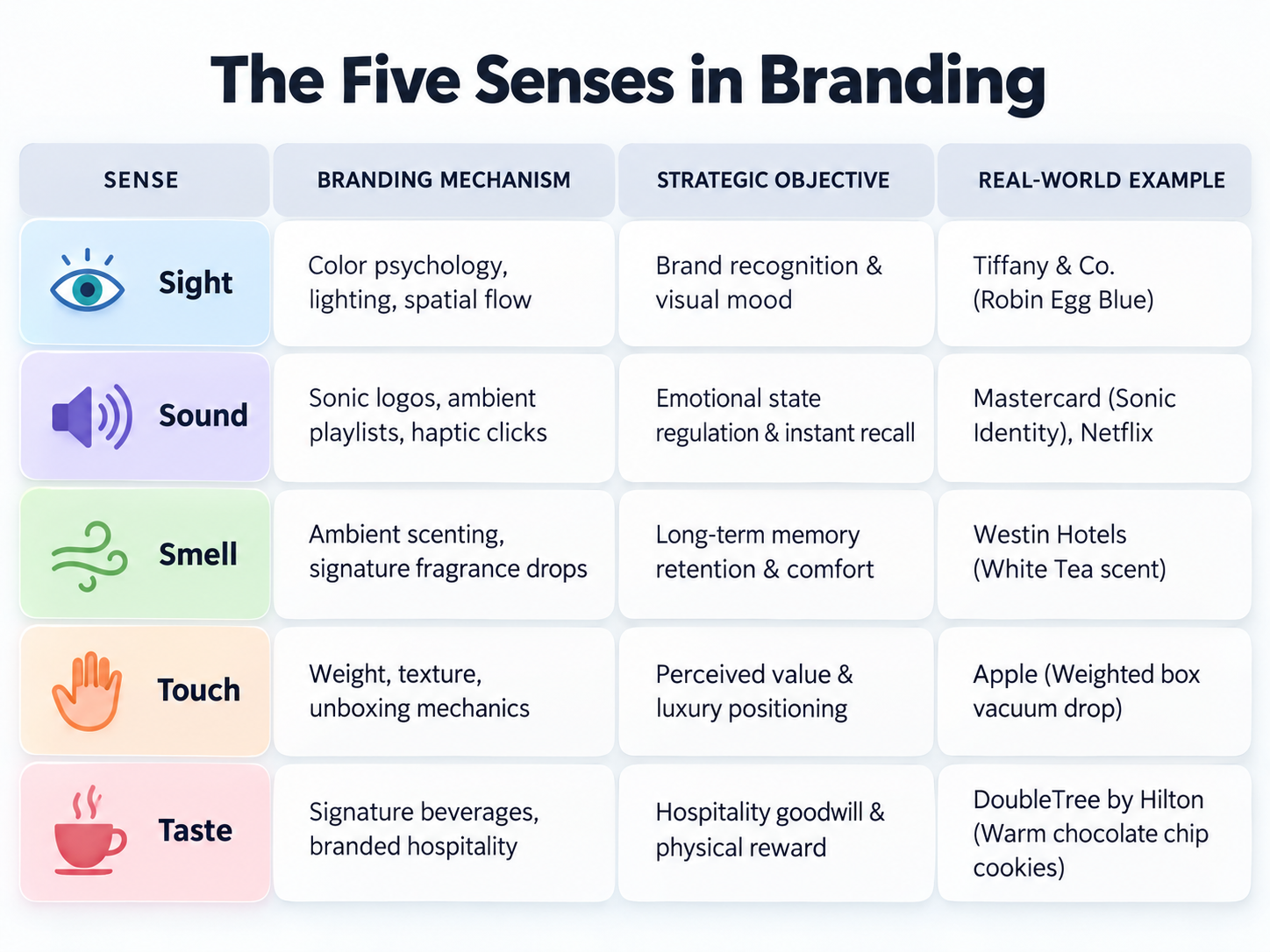
When these sensory inputs align harmoniously, they create a psychological phenomenon called sensory congruence—a state where all incoming signals reinforce the same core brand message.
3. Why Multi-Sensory Branding Matters Today
Several macro shifts are accelerating the demand for multi-sensory brand strategies:
A. The Antidote to Digital Frictionlessness
Digital transactions are smooth, fast, and completely flat. Buying a shirt on a phone screen feels identical to booking a flight or paying a bill. Because e-commerce lacks physical texture, brick-and-mortar spaces must offer sensory depth that a screen cannot replicate.
B. Ad Blindness and Visual Fatigue
The average person sees between 4,000 and 10,000 visual ads per day. As a result, consumers have developed high levels of "banner blindness" and visual tuning-out. Scent and sound cut through this visual noise passively—you can close your eyes, but you cannot turn off your nose or ears.
4. The Danger of "Sensory Mismatch"
While multi-sensory branding is powerful, executing it poorly can be counterproductive. Sensory dissonance occurs when different sensory inputs send conflicting messages to the consumer.
For example:
- Playing aggressive, high-bpm electronic music inside a luxury spa store creates anxiety because the audio clashes with the calming visual environment.
- Using overly harsh, chemical artificial fragrances in a bakery or organic grocery store undermines consumer perception of product freshness.
Every sound, texture, scent, and lighting choice must tell the exact same story.
How to Apply Multi-Sensory Principles to Your Business
You don't need a million-dollar aviation budget to harness multi-sensory branding. Here is how any business can get started:
- Audit Your Sensory Touchpoints: Walk through your store, office, or product unboxing experience as a customer. What do you hear? What does the packaging feel like? Is there a neutral or pleasant ambient scent?
- Develop a Sonic Baseline: Choose a consistent acoustic signature for videos, podcasts, retail environments, or app interactions. Sound should reflect your brand persona—calm, energetic, authoritative, or playful.
- Focus on Tactile Interactions: Upgrade physical touchpoints. Swapping flimsy paper stock for heavy textured business cards, or adding weighted closures to product boxes, immediately elevates perceived quality.
From Branding to Brand Experience
The strongest brands are not only recognised by how they look — they are remembered by how they make people feel.
A well-designed brand experience brings together sight, sound, scent, touch and interaction to create a consistent emotional impression across every customer touchpoint.