Beyond the Race: Why F1 Has Become a Brand Experience
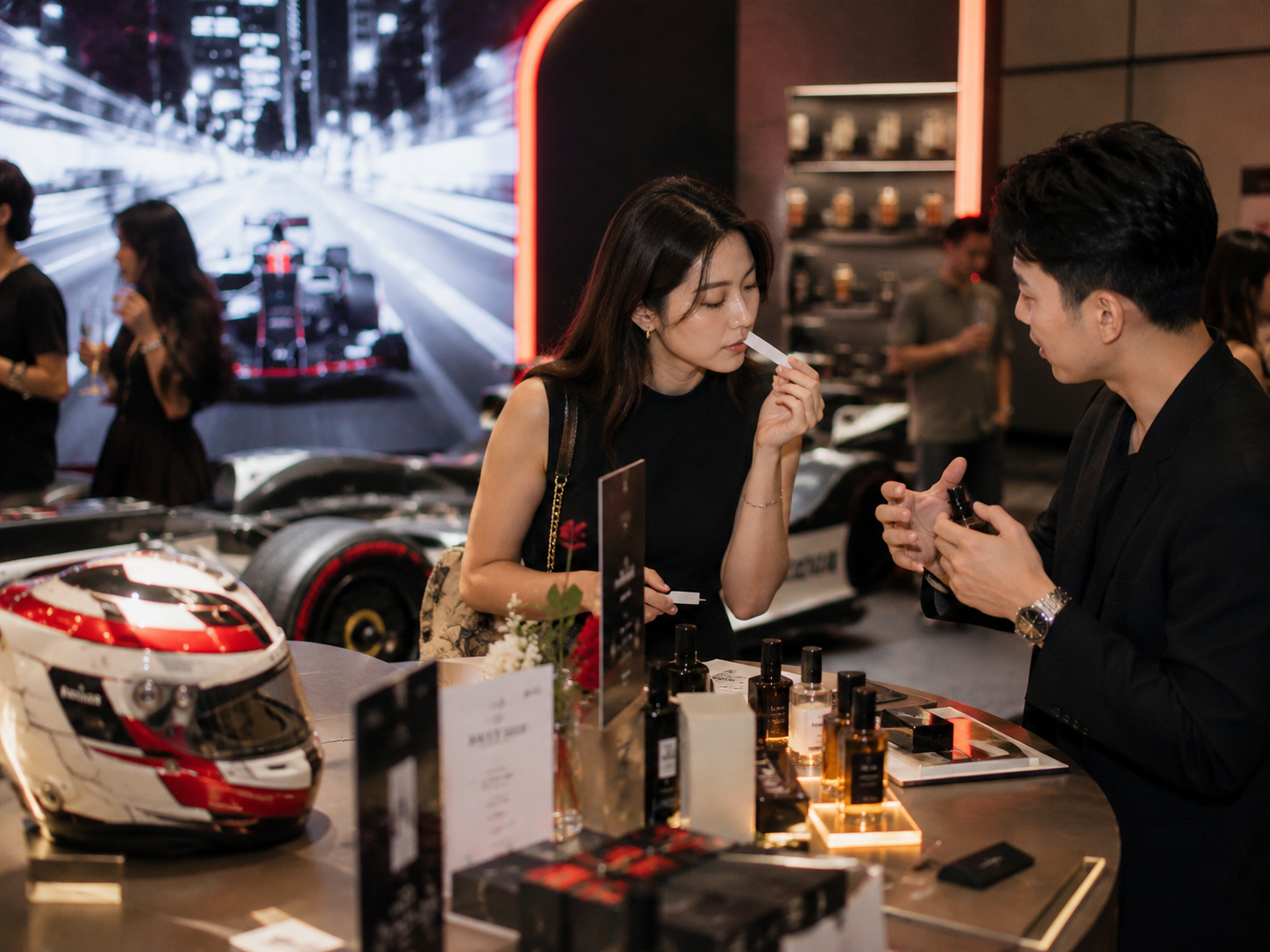
When Formula 1 comes to Singapore, the excitement doesn't stay within the racetrack.
The city changes with it.
Hotels, restaurants, shopping malls, entertainment venues and brands become part of the race-week atmosphere. Pop-ups appear, special menus are launched, parties and performances take place, and brands find creative ways to connect themselves with one of Singapore's biggest international events.
For audiences, F1 is no longer simply something to watch.
It has become something to experience.
And for brands, that shift offers an important lesson: today's consumers don't only remember what a brand says. They remember how a brand made them feel.
The Evolution of F1: From Engineering Sport to Global Cultural Event
For decades, Formula 1 was primarily defined by technical precision, engine mechanics, and track performance. Its core audience consisted of dedicated motorsport enthusiasts who tuned in specifically to analyze pit-stop strategies, aerodynamics, and lap times.
However, over the past decade—accelerated by Liberty Media’s acquisition of F1 in 2017 and the global phenomenon of Netflix’s Drive to Survive—the sport underwent a radical transformation.
F1 expanded its focus from pure competition to storytelling, character development, and immersive atmosphere. It successfully bridged the gap between elite sports, lifestyle entertainment, luxury culture, and musical festival experiences.
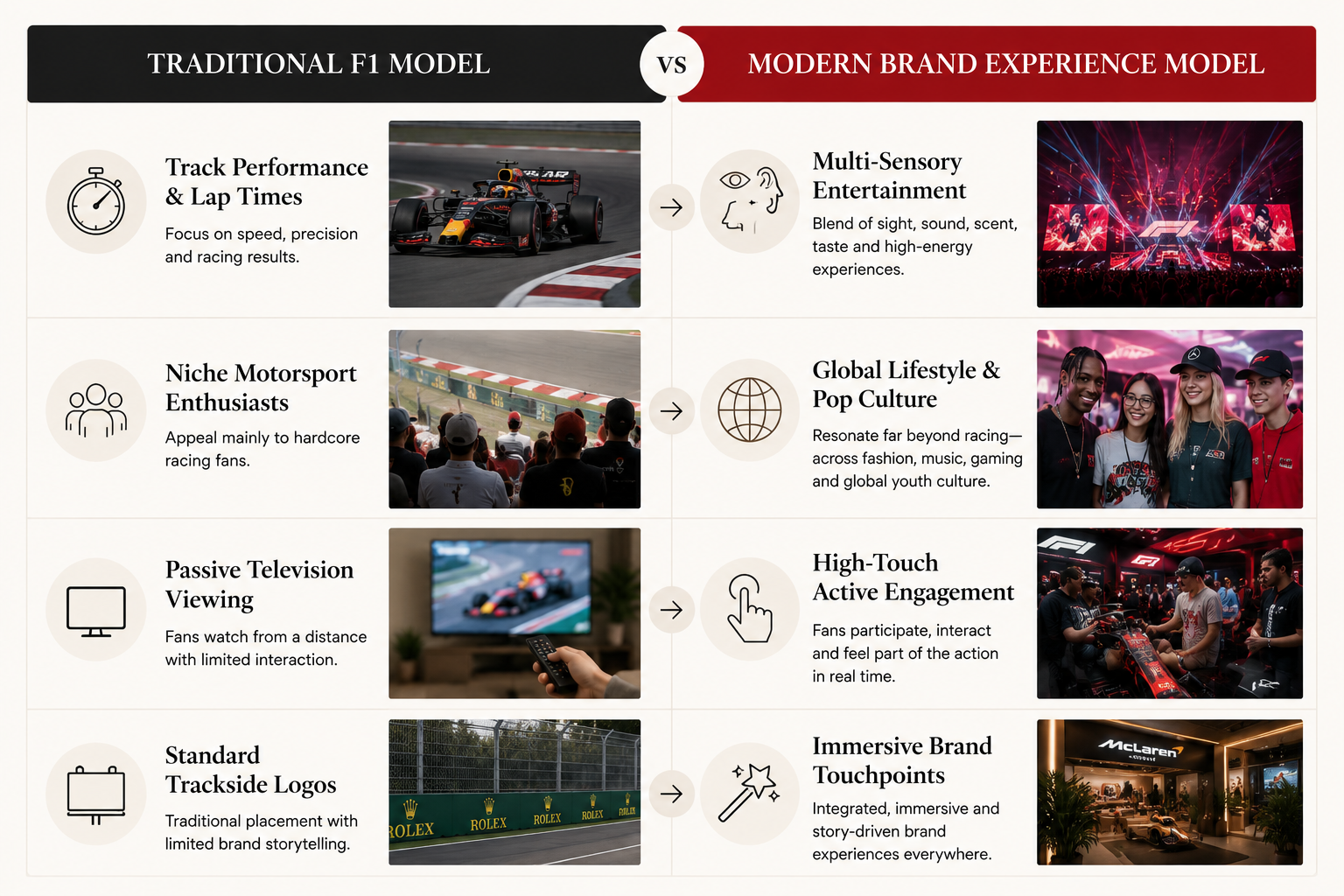
Today, an F1 weekend is an all-encompassing cultural takeover, and the Singapore Grand Prix—the original night race—serves as the ultimate blueprint for this model.
The Singapore Night Race: The Ultimate Blueprint for Immersive Marketing
When Marina Bay transforms into a circuit under the glare of floodlights, the racing cars are only one part of the main attraction. The event seamlessly integrates world-class music festivals, culinary pop-ups, and luxury hospitality right into the heart of the city’s financial district.
Because the event takes place in an urban street circuit, the boundaries between the track and the city vanish. This creates a unique ecosystem where non-endemic brands (companies outside of automotive or fuel industries) can participate organically:
- High-Touch Experiential Pop-Ups
Luxury fashion houses, tech giants, and lifestyle labels construct temporary lounges and interactive exhibits across shopping districts like Orchard Road and Marina Bay Sands. These spaces offer consumers interactive simulators, limited-edition product drops, and exclusive access, turning passive onlookers into active participants.
- Sensory Storytelling
Race week engages every human sense—the deafening roar of V6 hybrid engines, the smell of burning rubber, the visual spectacle of illuminated skylines, and the taste of curated dining menus. Brands leverage this sensory overload to link their own products to feelings of adrenaline, prestige, and high energy.
- Cross-Industry Synergy
A single race weekend brings together hospitality, fashion, technology, music, and gastronomy. A hospitality brand might team up with a luxury watchmaker to host a rooftop viewing party, creating a multi-layered brand narrative that far outweighs a standard banner ad.
The Psychology of Experiential Marketing: Why "Feeling" Beats "Telling"
Why are brands willing to invest millions into physical race-week activations rather than traditional digital advertising? The answer lies in consumer psychology and the limitations of digital noise.
- Emotional Memory Encoding: Neurological studies show that events triggering high emotional arousal (excitement, awe, anticipation) forge significantly stronger memory pathways. A consumer might scroll past dozens of digital ads a day without remembering one, but they will long remember attending an exclusive, high-energy event under the Singapore skyline.
- The Rise of "Experiential Currency": Modern consumers—particularly Millennials and Gen Z—value experiences and shared memories over traditional product placements. Participating in an F1-themed activation yields "social currency"—moments worth capturing, sharing, and talking about within their social networks.
- Association by Proximity: By aligning with F1, brands absorb the positive attributes associated with the sport: cutting-edge innovation, speed, luxury, resilience, and peak human performance.
Key Lessons for Marketers Beyond the Track
You don't need a multi-million-dollar sports sponsorship budget to apply the principles of the F1 brand transformation. Any organization can elevate its marketing by shifting from transactional promotion to experience design:
1. Build an Atmosphere, Not Just an Ad
Consider every touchpoint a customer has with your business. How can you make that interaction feel distinct, atmospheric, and memorable? Whether designing an online checkout flow or hosting a local product launch, focus on the overall mood and emotional takeaway.
2. Bridge the Digital and Physical Worlds
The best F1 brand activations don't keep physical events and digital content separate—they merge them. Use live physical events to create rich, authentic digital content, while using online platforms to invite participation in offline spaces.
3. Leverage Strategic Collaborations
F1 excels because it breaks out of its industry silo. Look for partners outside your immediate category who share your target demographic and brand values. Cross-industry collaborations allow you to tap into new audiences in authentic, surprising ways.
Turn Your Brand Into an Experience
From interactive workshops and product customisation to creative brand activations, businesses can create experiences that allow customers, employees and partners to engage with their brand in a more memorable way.