Are Short Courses Becoming the New Way to Upskill?
Learning used to feel like a major commitment.
If you wanted to gain a new skill, you might imagine enrolling in a diploma, returning to school or spending months working towards another qualification.
But the way people learn is changing.
Today, a course might take a few days rather than a few years. You could spend a weekend learning a practical skill, attend a workshop to explore a new field or complete several smaller courses over time.
In Singapore, this flexibility is becoming increasingly visible. SkillsFuture now highlights options including e-learning, modular programmes that can be combined and short courses that can be completed within a week.
So, are short courses becoming the new way to upskill?
The Shift from Traditional Degrees to Micro-Credentials
For generations, education followed a linear path: finish school, earn a degree or diploma, enter the workforce, and rely on that single foundation for the rest of your career. However, the rapid pace of technological change and industry transformation has exposed the limitations of this traditional model.
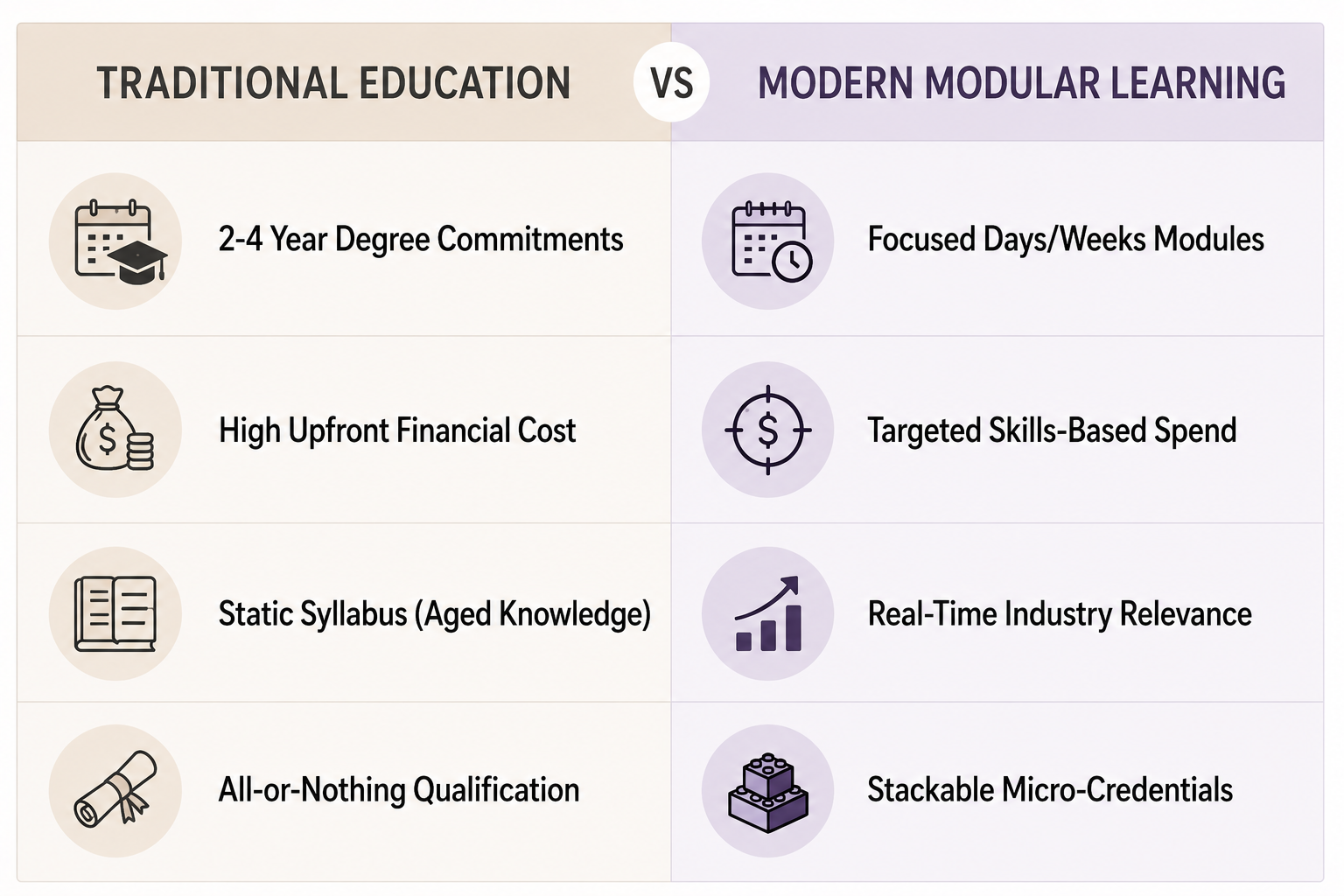
By the time a traditional multi-year curriculum is designed, approved, and taught, key technological tools may have already evolved. Short courses bridge this gap by offering just-in-time learning—targeted training delivered precisely when an industry or professional needs it.
Why Professionals Are Choosing Short Courses
The surge in short-course enrollment isn't just about convenience; it reflects a fundamental shift in how professionals manage their careers.
1. Speed to Impact
Short courses focus strictly on practical application, cutting out high-level theoretical filler. Whether it’s mastering generative AI prompting, understanding data analytics with Python, or learning digital marketing strategy, learners gain actionable skills they can immediately apply at work the very next Monday.
2. Lower Financial and Temporal Risk
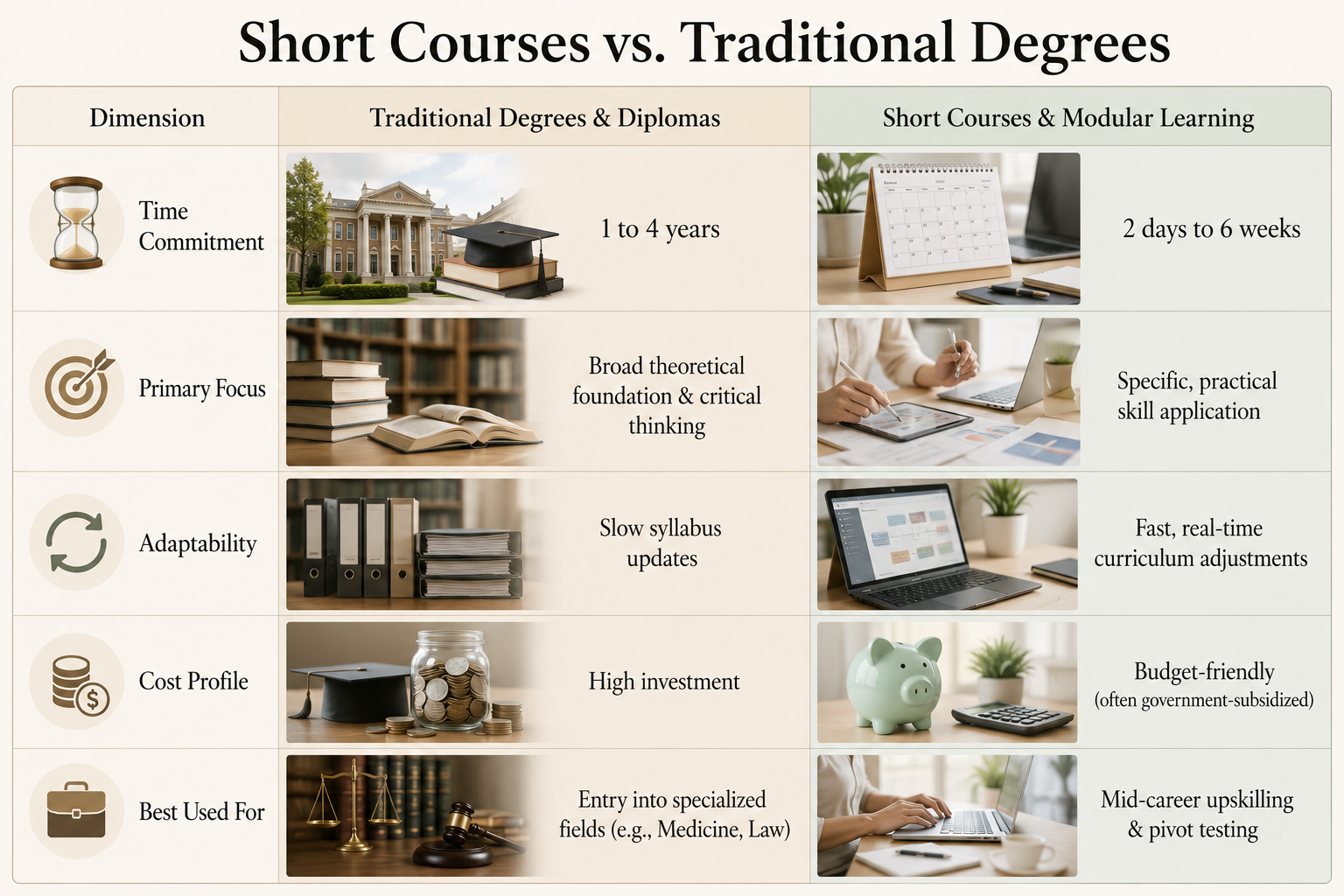
Enrolling in a full-time master’s program requires significant financial investment and time away from work. Short courses allow professionals to test new industries or pick up specialized tools without putting their careers or finances on hold.
3. The Power of "Stackable" Qualifications
Rather than committing to a broad, all-in-one qualification, modern learners build custom skill stacks. You might take a 2-day workshop in user experience (UX) design, follow it with a short module on product management, and top it off with an e-learning certificate in project management—creating a tailored skill set suited to your exact career goals.
Singapore’s Push for Lifelong Employability
Singapore has been at the forefront of this educational shift. National initiatives like SkillsFuture actively encourage a mindset of lifelong learning by funding modular courses across institutes of higher learning (IHLs) and private training providers.
With micro-credentials and bite-sized modules, professionals can continuously refresh their skill sets alongside their full-time jobs. Employers, too, are increasingly adopting skills-based hiring—valuing proven competence in specific tools over traditional degree credentials alone.
How to Build Your Own Short-Course Upskilling Strategy
To make the most of short-form learning, avoid taking random courses simply to collect certificates. Approach your professional growth with a clear plan:
- Identify Your Skill Gaps: Look at job listings one step ahead of your current role. What specific tools or methodologies appear repeatedly? Target short courses that fill those exact gaps.
- Prioritize Hands-On Projects: Choose courses that end with a tangible project or portfolio piece rather than just a passive attendance certificate.
- Verify Provider Quality: Look for modules backed by recognized institutions, industry associations, or platforms eligible for local subsidies like SkillsFuture to ensure high training standards.
Short courses aren't replacing foundational education entirely, but they have irrevocably changed how we keep pace with a changing economy. By turning learning from a rare, multi-year event into a continuous, manageable habit, bite-sized education allows professionals to stay agile, competitive, and curious throughout their careers.
Discover Something New
Whether you're looking to strengthen your professional skills, explore a new interest or gain practical experience in a different area, short courses can be an accessible way to keep learning.