7 Colour Analysis Myths that Tiktok Got Wrong
Seasonal colour analysis has officially taken over social media. With billions of views under tags like #coloranalysis, TikTok feeds are flooded with creators using digital filters, testing gold versus silver jewelry, and diagnosing strangers' undertones in seconds.
While the sudden resurgence of "getting your colours done" has helped millions shop more intentionally, short-form video algorithms have also spread a massive wave of oversimplifications and outright myths.
If you have been holding a silver spoon to your face or relying on a glitchy phone filter to overhaul your wardrobe, here are 7 major colour analysis myths TikTok got wrong—and what real colour theory actually says.
1. Myth: The Wrist Vein Test Gives an Accurate Diagnosis
The TikTok Trend: Look at the veins on the inside of your wrist. If they look green, you are warm; if they look blue or purple, you are cool. If you see both, you are neutral.
The Reality
The wrist vein test is notoriously unreliable. Vein appearance is influenced by skin thickness, blood oxygenation, surface redness, and sun exposure—which is often significantly higher on your arms than on your face.
Colour analysis is concerned with how light reflects off your facial skin. The pigment on your inner wrist rarely reflects the undertone, contrast, and depth around your eyes, cheeks, and jawline.
Takeaway: Stop looking at your wrists. Test fabric swatches or clothing directly against your bare face under natural daylight.
2. Myth: TikTok AI Filters and ChatGPT Prompts Work
The TikTok Trend: Slap on a digital color analysis filter or upload a selfie into an AI prompt to get an instant seasonal breakdown.
The Reality
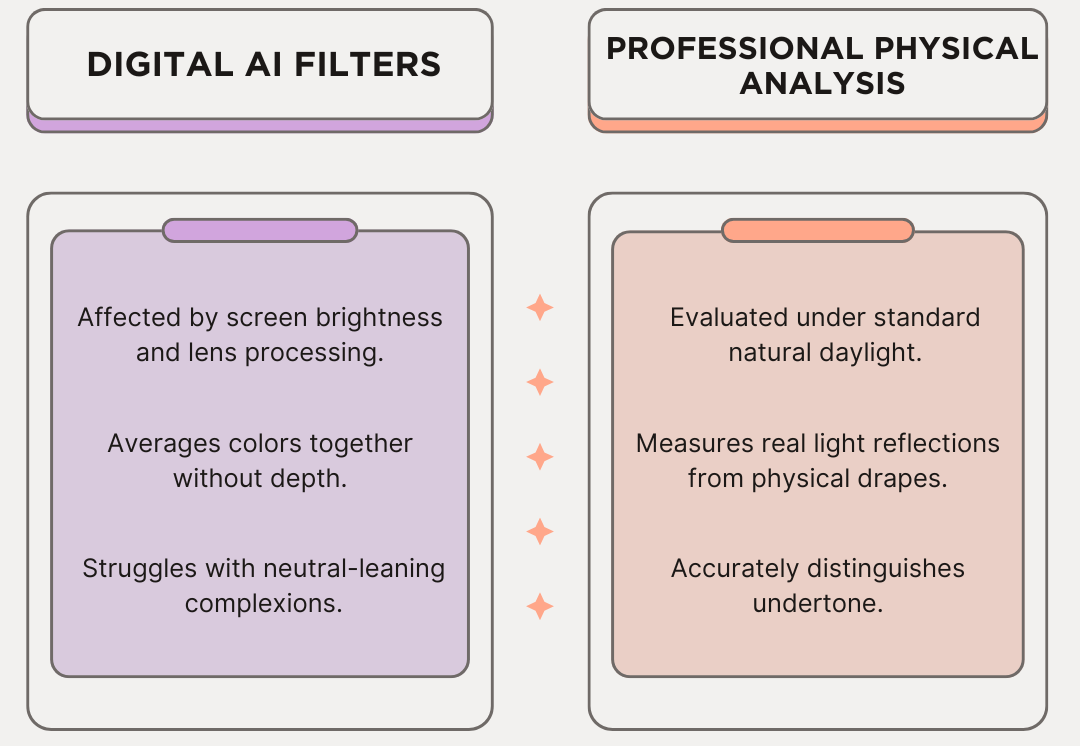
Digital filters and image-processing AI algorithms fail at color analysis almost every time. Phone cameras automatically apply white balance, auto-exposure, and subtle skin-smoothing filters before an image is saved.
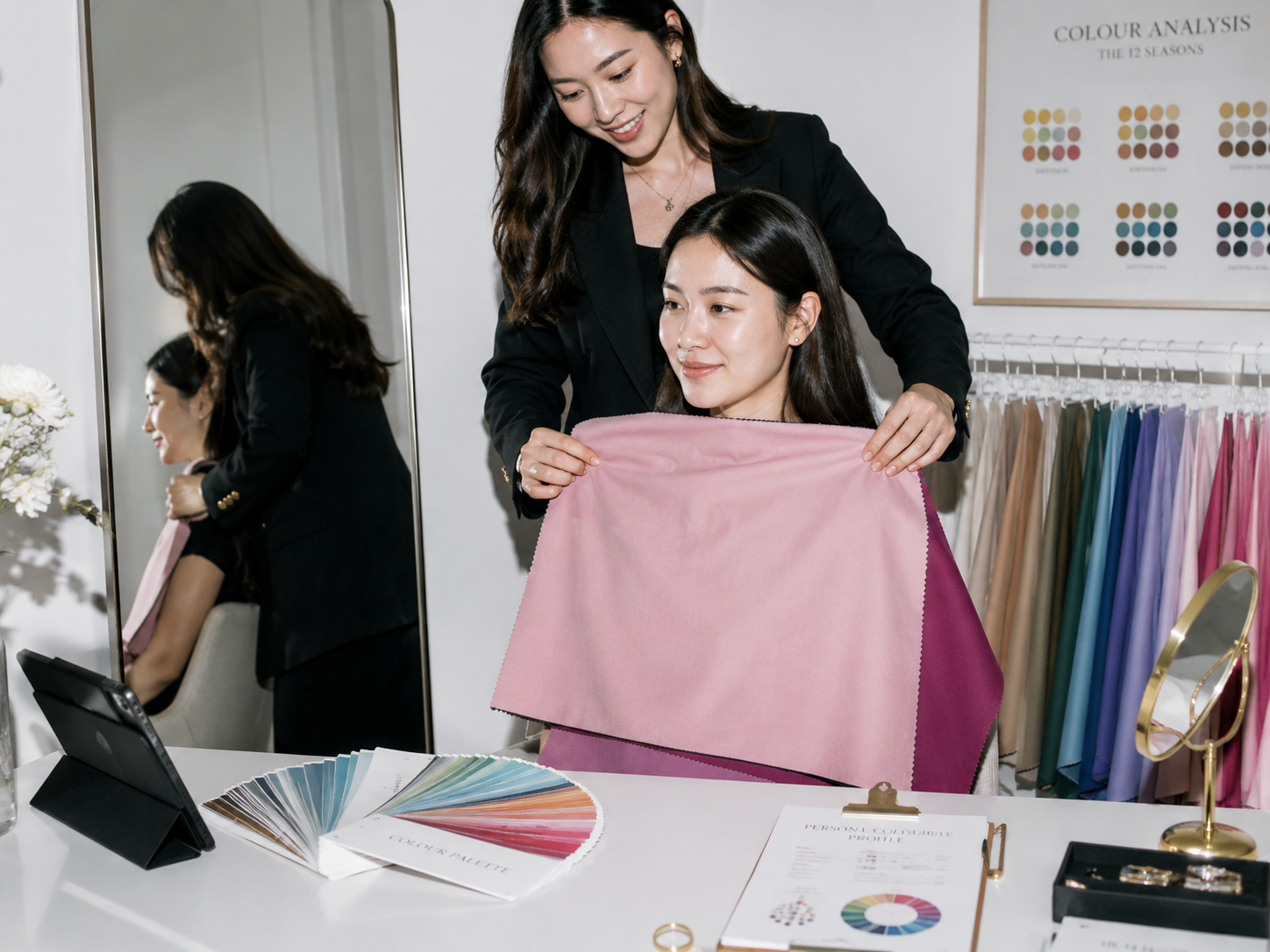
Furthermore, digital swatches overlaid on a screen do not project real light back onto your face. True color analysis relies on observing how real fabric drapes cast shadow or brightness onto your jaw and under-eye area.
3.Myth: Gold vs Silver Is a Binary Test
The TikTok Trend: Hold up a piece of gold jewelry and a piece of silver jewelry. Whichever makes your skin "pop" immediately reveals if you are Warm or Cool.
The Reality
While metallic testing is a helpful indicator, it isn't binary. Gold comes in rose gold, bright 24k yellow gold, brushed brass, and pale antique gold; silver ranges from icy platinum to deep gunmetal or muted pewter.
A "Soft Summer" (a cool, muted season) might look washed out in high-shine sterling silver but look stunning in brushed silver or rose gold. The finish (shiny vs. matte) and saturation of the metal matter just as much as the temperature.
4.Myth: Dark Hair and Eyes Automatically Make You a Winter or Autumn
The TikTok Trend: If you have dark brown or black hair and deep brown eyes, creators immediately place you in Deep Autumn or Deep Winter.
The Reality
Depth of hair and eyes is only one variable. Traditional color analysis systems were originally heavily biased toward fair Western complexions, leading to widespread misclassification for people of color and people with dark features.
A person with deep brown hair and eyes can easily be a Bright Spring (if their skin has clear, high-chroma warmth) or a Cool Summer (if their skin surface tone is soft and cool despite dark features).
Takeaway: Your skin's undertone and how it reacts to color temperature always overrides your hair or eye color.
5.Myth: Undertone Is the Only Thing That Matters
The TikTok Trend: Every video focuses 90% of its time on "Are you warm or are you cool?"
The Reality
In professional color theory, a color (and a personal complexion) is defined by three distinct dimensions:
- Temperature (Undertone): Warm vs. Cool.
- Value (Depth): Light vs. Deep.
- Chroma (Clarity/Saturation): Bright/Clear vs. Muted/Soft.
For many people, chroma or value is actually their dominant characteristic. For example, if you have a "Soft Autumn," your primary need is muted, dusty shades—whether a color is slightly warm or slightly cool is secondary to how soft the shade is.
6.Myth: Your Palette Never Changes for Your Entire Life
The TikTok Trend: Once you find your season, you are locked into that palette forever.
The Reality
While your underlying genetic skin undertone remains largely stable, the way color interacts with your face changes over time.
As people age, natural melanin shifts, skin loses density, and hair naturally transitions to grey, silver, or white. A major hair color transformation—such as going from natural dark brown to icy platinum—dramatically alters your overall contrast level and can shift your most flattering palette sub-season.
7.Myth: Color Analysis Means You “Can’t” Wear Certain Colors
The TikTok Trend: "I'm a Summer, so I can never wear black or orange again."
The Reality
Seasonal color analysis is a tool for harmony, not a restrictive dress code.
Every hue on the color wheel exists in warm, cool, light, deep, bright, and muted variations. You don't have to banish pink, red, or green from your closet; you simply learn which shade of red (e.g., icy raspberry vs. warm burnt brick) complements your natural features.
Pro Tip: If a color outside your palette holds sentimental value, wear it away from your face (as trousers, skirts, shoes, or handbag accessories) or balance it with makeup in your flattering palette.
How to Do a Proper Self-Analysis at Home
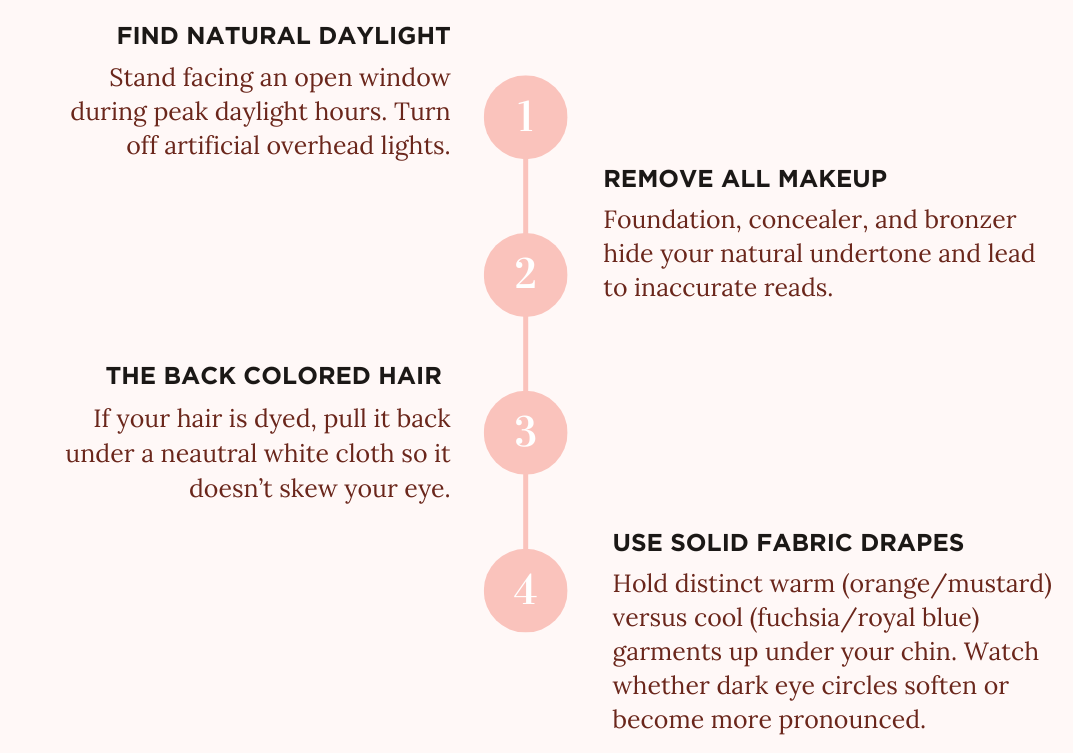
If you want to skip the TikTok gimmicks and test your colors accurately, follow these steps:
Colour Analysis Is a Guide, Not a Rulebook
The popularity of colour analysis on TikTok has encouraged more people to think about the colours they wear, but a 30-second video can only tell you so much. While social media can be a great starting point, understanding your personal colours requires looking beyond filters, quick hacks, and one-size-fits-all advice.
Remember that colour analysis isn't about limiting your wardrobe or following rigid rules. Instead, it's about discovering the shades that naturally complement your features, enhance your confidence, and make shopping for clothes and makeup more intentional.
Ready to Discover the Colours That Suit You Best?
If you'd like to explore colour analysis beyond social media trends, our Personal Makeup Workshop introduces the fundamentals of undertones, seasonal colour analysis, and choosing makeup shades that complement your natural features.
You'll gain practical knowledge that can help you select foundation, lipstick, blush, and eyeshadow colours with greater confidence.